Half marathon guide
Two-Week Half Marathon Taper Guide
A two-week half marathon taper usually reduces training volume while keeping some familiar movement and brief race-specific reminders. The goal is not to add fitness at the last minute; it is to arrive with less accumulated fatigue and a routine you trust.
The short answer
A two-week half marathon taper usually reduces training volume while keeping some familiar movement and brief race-specific reminders. The goal is not to add fitness at the last minute; it is to arrive with less accumulated fatigue and a routine you trust.
A two-week taper reduces fatigue without abandoning rhythm
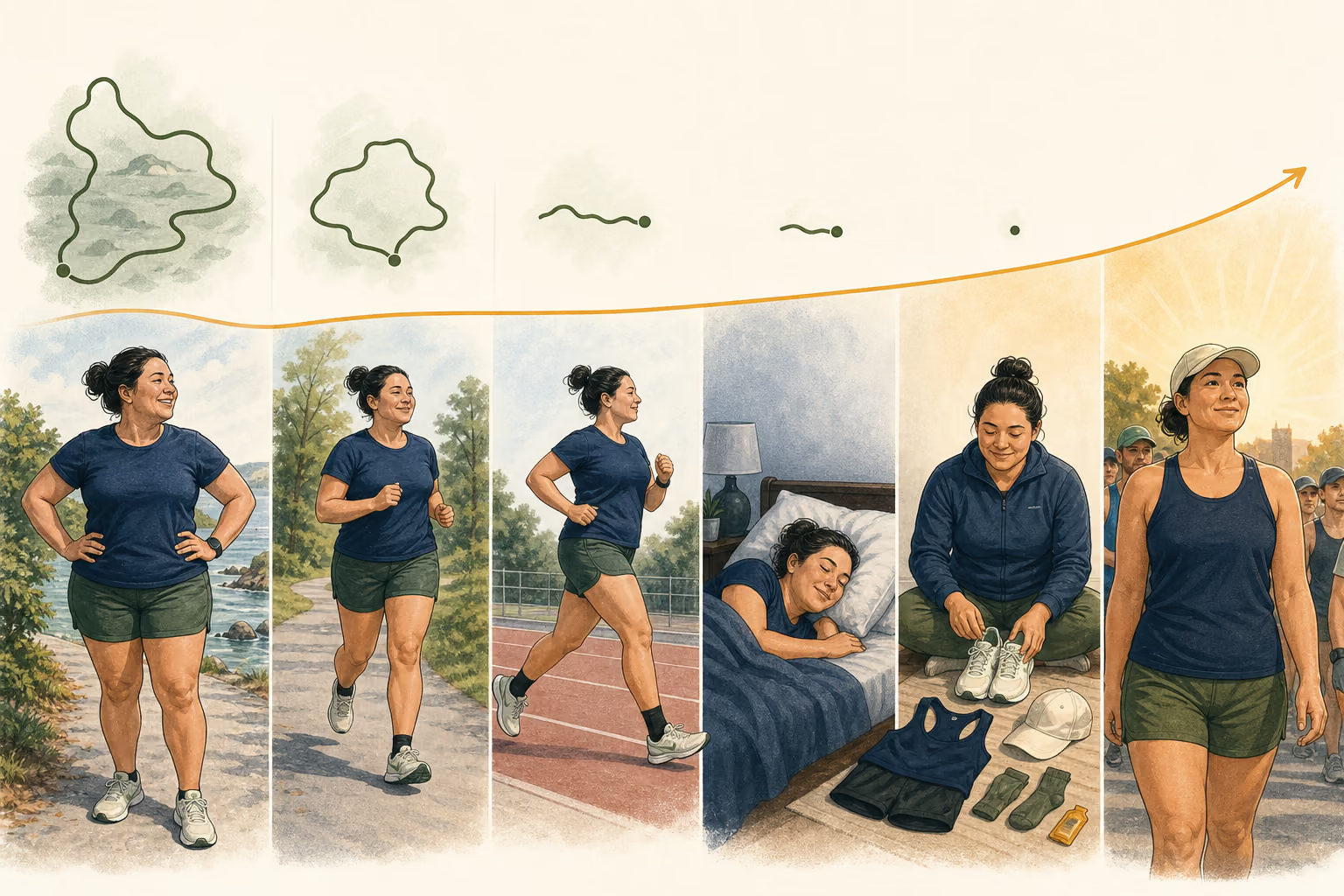
A half marathon taper is a planned reduction in training load before race day. For many recreational runners, the final 7–14 days contain less mileage and a shorter long run while preserving familiar running days and small doses of race rhythm. The taper cannot build missing endurance; it helps reveal the fitness already trained and create time to settle the broader race-day preparation sequence.
Volume means the amount of training—miles, minutes, or work. Intensity describes how hard it is. Frequency is the number of sessions. A taper usually reduces volume most clearly while avoiding a complete disappearance of intensity and frequency. That distinction prevents the final fortnight from becoming either another peak block or two weeks on the couch.
The exact shape depends on peak volume, running frequency, experience, and how fatiguing the training has been. A three-day beginner does not need the same schedule as a six-day runner. Use percentages as broad planning tools, then make the actual runs familiar and recoverable.
The taper is not medical treatment. Illness, pain that changes movement, or concerning symptoms require an individualized decision. Do not assume lower mileage makes racing safe.
What the evidence says—and does not say
The broad finding
A 2023 systematic review and meta-analysis found endurance performance benefits from tapers that reduce volume while maintaining intensity and frequency, with tapers of up to 21 days represented. The pooled evidence supports shedding training load rather than stopping all purposeful movement.
The included studies span sports, athlete levels, and protocols. They do not prove that one exact percentage or fourteen-day template is optimal for every recreational half marathoner.
Why half marathon tapers are often shorter
A half marathon usually creates less training volume and race damage than a marathon, and many recreational plans peak modestly. Seven to fourteen days can be enough to reduce fatigue without leaving the runner feeling detached from routine.
A high-volume runner or someone carrying marked fatigue may use a longer or more substantial taper. A low-volume beginner may need only a moderate reduction. The training completed before the taper determines how much load exists to remove.
An illustrative two-week taper by runner type
| Runner | Week 2 before race | Race week | Keep familiar |
|---|---|---|---|
| 3-day beginner | Two short easy runs; long run reduced from peak | Two brief easy runs; optional brief strides; race | Same three-day rhythm where practical |
| 4-day intermediate | About 70–85% of recent volume; short race-pace touch | About 45–65%; one brief quality reminder; race | Usual easy-day spacing |
| 5–6 day experienced | Moderate volume reduction; intensity retained in smaller dose | Clear volume reduction; short sharpening session | Frequency may stay relatively high through shorter runs |
| Run-walk finisher | Shorten the long outing; keep practiced ratio | Brief run-walk sessions; race ratio unchanged | Timer, walking pace, and transitions |
Build the taper from the race backward
- 1
Place race day
Treat the race as the week's key session. All other work supports arriving ready for it.
- 2
Place the final short quality reminder
Use a familiar, reduced session three to five days before the race for many runners. It should finish with margin, not produce soreness.
- 3
Place easy runs
Keep familiar days but shorten them. Do not add runs on usual rest days because the individual sessions look small.
- 4
Reduce the prior long run
One week before the race, use a comfortable reduced duration. It is not a dress rehearsal at full distance.
- 5
Remove conflicting load
Cut heavy new strength work, hard cross-training, and makeup mileage. Normal life activity still counts when planning fatigue.
- 6
Check logistics
Use the time freed by training to settle travel and gear, not to create another fitness project.
Three taper workouts that preserve feel
These examples are reduced reminders, not tests. Use only formats already present in training.
Race-pace touch
Recall half marathon rhythm without accumulating substantial fatigue.
- Structure
- 10–15 minutes easy, then 3 × 4 minutes at planned race effort with 2 minutes easy, then 10 minutes easy.
- Effort
- Controlled; the final repetition should not require a push.
- Recovery
- Several easy or rest days remain before racing.
Easy run plus strides
Maintain leg turnover and confidence in relaxed quicker running.
- Structure
- 20–35 minutes easy, then 4 × 15–20 seconds relaxed strides with full walking recovery.
- Effort
- Fast and smooth, not sprinting.
- Recovery
- Stop if the strides create strain or unfamiliar tightness.
Run-walk rhythm check
Confirm race timer, transitions, and easy effort.
- Structure
- 20–30 minutes using the exact race ratio, with two run segments near intended race effort.
- Effort
- Mostly easy; no attempt to predict the finish from the session.
- Recovery
- End while the pattern still feels automatic.
What to do with strength and cross-training
Strength
Keep only familiar low-volume strength early in the taper if it reliably leaves running unaffected. Reduce sets, load, or both, and avoid unfamiliar eccentric work—the lowering phase that often produces delayed soreness.
Race week is not the time to chase a final adaptation. Many runners omit strength or use brief mobility and activation they already know.
Cross-training
An easy spin or swim can preserve routine, but it still adds load. Shorten it and avoid turning low-impact training into a secret hard workout because running mileage fell.
If cross-training is not part of normal weeks, do not add it to manage taper anxiety. Novel movement can create fatigue without improving race readiness.
Runner scenario
Scenario: Marcus misses his peak long run
Marcus, preparing for his first half marathon
He completed 9 miles three weeks before the race. Travel cancelled the planned 10-mile run two weeks before. His race is now ten days away.
- The decision
- Marcus wants to complete 10 miles this weekend and begin a five-day taper afterward.
- Recommended approach
- Keep the reduced long run already scheduled for race week—about 6–7 comfortable miles in his plan—and do not insert the peak. Shift the goal toward controlled completion if the missed work changes confidence.
- Why
- One late long run cannot deliver its intended adaptation before the race, but it can extend fatigue. Marcus has a 9-mile foundation and gains more from arriving rested than from proving ten miles under deadline.
Normal taper experiences that are poor fitness tests
One flat-feeling run
Short runs can feel awkward when routine changes. Do not add miles or pace to force sharpness. Review the pattern across several days.
Restlessness
Use the race checklist, normal walking, or a familiar short run. Avoid converting unused training time into strenuous errands.
A scale change
Carbohydrate storage and associated water can change weight. Do not react with restriction or a depletion experiment.
More noticeable sensations
Extra attention can amplify ordinary feelings. Pain that changes movement or concerning symptoms still require appropriate help; anxiety does not make every sensation harmless.
Fear of losing fitness
The taper is too short to erase a well-built base. Testing that belief with a hard run defeats the reduction.
Fix common taper mistakes
| Mistake | Why it fails | Correction |
|---|---|---|
| Stopping all running for two weeks | Removes rhythm and may feel unfamiliar | Keep usual frequency through shorter sessions where appropriate |
| Keeping mileage but slowing every run | Volume remains high and legs may feel flat | Reduce volume while retaining small familiar quicker segments |
| Adding a hard tune-up race | Creates fatigue and recovery uncertainty | Use a controlled reduced workout |
| Heavy last strength session | Can produce soreness without race benefit | Reduce or omit load; use familiar movements |
| Catching up missed miles | Trades freshness for calendar completion | Continue taper; revise goal if needed |
| Changing food dramatically | Adds digestive and energy uncertainty | Eat familiar meals; follow practiced fueling |
Sleep opportunity matters more than a perfect final night
Race nerves, travel, and an early alarm can make the night before imperfect. One short night does not erase months of training. Protect sleep opportunity across the preceding week by reducing optional late commitments and settling logistics early.
Do not use untested sleep supplements or medication changes for race week. Keep the room, caffeine timing, and wind-down routine as familiar as travel allows. If chronic sleep problems affect health or function, seek qualified care outside the urgency of the event.
Eating and drinking during the taper
Keep meals recognizable
Training volume falls, but recovery and carbohydrate availability still matter. Use familiar meals and gradually emphasize known carbohydrate foods rather than staging one enormous pasta dinner. Keep the meal connected to the fueling plan rehearsed in long runs.
Avoid aggressive restriction because you fear reduced mileage. It can leave training and race preparation under-fueled.
Hydrate normally
Begin race morning in your normal hydrated state rather than forcing liters of fluid in the final day. Excessive intake can also be harmful. Use thirst, normal routines, conditions, and individualized advice where needed.
Do not introduce a high-dose electrolyte or supplement protocol without training evidence. Race week is for familiar execution.
A sample race week for a four-day runner
| Day | Session | Purpose |
|---|---|---|
| Monday | Rest or normal easy movement | Absorb the prior reduced long run |
| Tuesday | 30–40 min easy with 4 relaxed strides | Maintain rhythm |
| Wednesday | Rest or familiar low-load mobility | Keep load low |
| Thursday | 25–35 min including 3 × 3 min race effort | Recall pace without testing it |
| Friday | Rest | Settle travel and gear |
| Saturday | 15–25 min easy or rest, based on established routine | Stay familiar, not fit |
| Sunday | Race | Use the fitness already built |
Adjust the taper when the training block was not normal
Low-volume beginner
A runner already training only three short days per week has fewer miles to remove than a high-volume runner. Cutting every run in half may create an abrupt two-week break rather than a taper. Preserve the familiar days when practical and reduce duration modestly, with the last long run shorter and easier than peak training.
Do not insert strides or race-pace running solely because a taper template includes them. If the runner has not practiced those elements, race week is the wrong time to learn the mechanics or discover the recovery cost.
Interrupted final month
Missed training from travel, illness, or pain cannot be compressed into the final fourteen days. Resume only what current health and qualified guidance support, and use completed earlier training to choose a more conservative race goal. A late long run does not repay the gap; it trades freshness for one unassimilated session.
If the interruption raises a health or readiness question, decide whether to start before polishing the taper. Deferral, a run-walk goal, or not racing can be rational outcomes rather than failures of discipline.
Runner carrying unusual fatigue
When easy pace has slowed, normal sessions feel disproportionately hard, sleep is disrupted, or daily energy is poor, remove optional intensity and investigate the context. More rest may help ordinary accumulated fatigue, but an article cannot determine whether illness, under-fueling, medication, or another issue is involved.
Judge improvement through daily function and easy movement, not a hard confidence test. Persistent or concerning changes deserve appropriate professional input.
Read the final tune-up without overinterpreting it
| What happens | Likely planning response | What it does not prove |
|---|---|---|
| Short race-pace segments feel smooth | Keep the taper unchanged | A guaranteed finish time |
| Legs feel flat but breathing is controlled | Finish the planned small dose and recover | Lost fitness that requires extra intervals |
| Goal pace feels unusually hard | Stop the quality portion and review sleep, illness, weather, and goal | That one run must be conquered tomorrow |
| A new pain changes form | End the session and seek appropriate guidance | Normal taper anxiety |
| Watch pace is odd in wind or GPS error | Use effort and known distance; avoid compensation | A sudden physiological decline |
| The session was missed | Continue the remaining taper | A need to place it the day before the race |
Count non-running load during race week
Reduced mileage does not guarantee a low-load week. An expo can add hours of walking and standing; a destination event adds luggage, driving or flying, unfamiliar food, and disrupted sleep. Work deadlines, childcare, and house projects also consume recovery even though they never appear in the training log.
Protect the highest-value logistics first: ordinary meals, sleep opportunity, packet pickup, transport, and time off the feet when practical. This does not require avoiding all movement or treating the runner as fragile. It means declining optional fatigue that offers no preparation benefit. If a long expo visit is part of the experience, shorten another outing rather than pretending the accumulated standing is free.
Set your taper today
- 1
Calculate recent normal volume
Use several completed weeks, not the single peak, as context.
- 2
Reduce workload in two stages
Make the penultimate week moderately smaller and race week clearly smaller.
- 3
Keep familiar rhythm
Shorten usual running days and preserve only small doses of known intensity.
- 4
Remove last-minute experiments
Freeze strength, food, gear, and recovery routines that could create soreness or uncertainty.
- 5
Connect taper to race plan
Use the personalized race-specific plan or your fixed schedule to ensure final sessions support the actual event date.
Put it into a plan
Turn this guidance into your next useful step.
Use a free resource to explore your options, or build a race-specific plan around your date, availability, and current fitness.
Build your plan for $19.99Keep learning
Related resources
Half Marathon Training Phases Explained
See how base, build, peak, taper, and race weeks work together in a half marathon training plan.
Read guideHalf Marathon Fueling Plan: What to Practice
Create a simple half marathon fueling plan by practicing carbohydrates, fluids, timing, and race-day routines during training.
Read guideHalf Marathon Race Pace Strategy
Build a half marathon race pace strategy with a realistic opening effort, controlled adjustments, and practice from training runs.
Read guideQuestions runners ask
- Is two weeks too long to taper for a half marathon?
- Not necessarily. Two weeks suits many recreational runners, especially after substantial training. The first week may be only moderately reduced and race week more clearly reduced. A lower-volume beginner may need a lighter seven- to ten-day reduction rather than fourteen days of minimal running.
- How much mileage should I cut?
- The evidence supports reducing volume, but no exact percentage fits everyone. An illustrative approach is roughly 70–85% of recent volume in the penultimate week and 45–65% in race week, adjusted for frequency and experience. Keep the runs familiar and finish them with margin.
- Should I keep speed work during the taper?
- Keep a small dose of familiar intensity rather than a full hard workout. Short race-pace intervals or relaxed strides can preserve feel. Reduce repetition count and total volume, avoid maximal efforts, and do not introduce a new workout.
- What if my legs feel heavy during taper?
- One heavy-feeling run is not a fitness verdict. Continue the planned reduced routine, sleep and eat normally, and avoid testing yourself. If pain changes movement or symptoms are concerning, general taper reassurance is not enough; seek appropriate guidance.
- Can I lift weights in race week?
- Many runners omit lifting or use only a brief familiar low-load routine. Heavy, high-volume, or unfamiliar eccentric work can create soreness without meaningful race-day adaptation. If strength is normally frequent, reduce it substantially and place it early.
- When should the final long run happen?
- For many half marathoners, the final substantial long run is about two weeks before racing, followed by a shorter easy long run one week before. The exact placement depends on the plan and recovery. Do not put the peak long run inside the final week.
- Will I lose fitness if I rest more?
- A well-designed one- to two-week taper is intended to reveal fitness by reducing fatigue, not erase it. Keep familiar running frequency where suitable through shorter sessions. The larger threat is replacing the taper with hard reassurance workouts.
Sources and methodology
This guide is educational, not medical advice. It is written from general training principles and linked primary or official references; use judgment for your own conditions and consult a qualified professional for individual health concerns. Read our editorial methodology.
- ACSM's Guidelines for Exercise Testing and Prescription — American College of Sports Medicine. General exercise-training principles and progression guidance.
- Physical Activity Basics — Centers for Disease Control and Prevention. Public-health guidance on physical activity and its role in health.
- Effects of tapering on performance in endurance athletes — PLOS ONE. 2023 systematic review and meta-analysis of endurance-athlete tapering strategies.
- The Effect of Periodization and Training Intensity Distribution on Middle- and Long-Distance Running Performance: A Systematic Review — International Journal of Sports Physiology and Performance. Review of periodization and pyramidal, polarized, and threshold training distributions in distance running.