Half marathon guide
Hilly Half Marathon Strategy
A hilly half marathon is best paced by effort. Shorten your stride and accept a slower pace on climbs, stay controlled on descents, and use training to practice the terrain and strength demands rather than expecting flat-course splits on every mile.
The short answer
A hilly half marathon is best paced by effort. Shorten your stride and accept a slower pace on climbs, stay controlled on descents, and use training to practice the terrain and strength demands rather than expecting flat-course splits on every mile.
Run a hilly half marathon by even effort, not identical splits
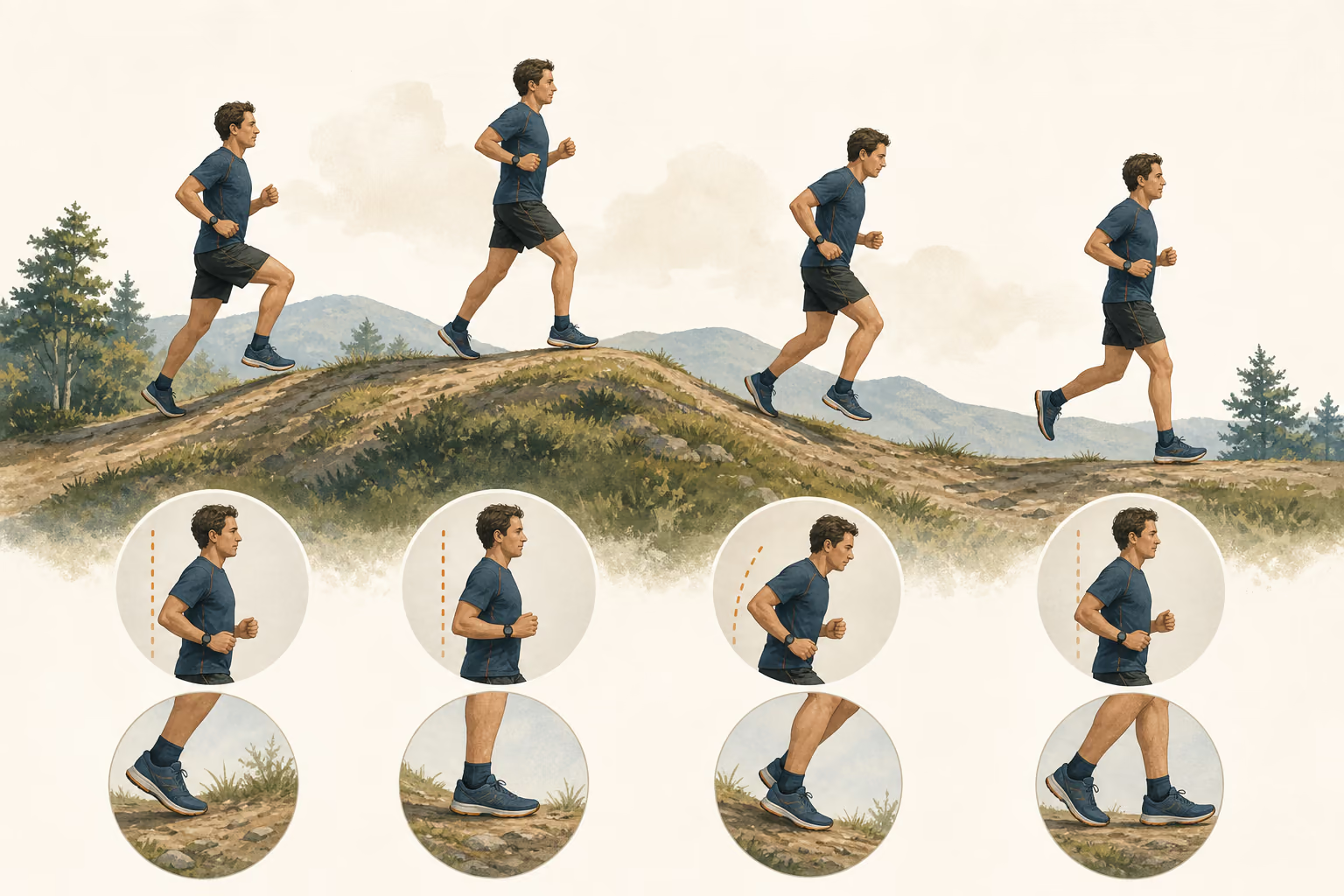
The central hilly half marathon strategy is to let pace slow on climbs, keep the effort below a damaging surge, carry controlled momentum across the crest, and descend with quick balanced steps rather than aggressive braking or overstriding. Plan each major hill by its location and shape, because an early short climb and a long climb at mile 10 demand different restraint.
A measured half marathon remains 13.1 miles, but elevation changes how those miles cost energy and load the legs. Research measuring oxygen cost across treadmill gradients demonstrates that uphill and downhill locomotion do not have the same energetic profile as level running. That laboratory study does not produce a race-time adjustment for every hill; it supports the more useful principle that flat pace cannot be imposed on changing grade at a constant cost.
Use pace as a report and effort as the control. The watch can show that a climb was slower, but it cannot tell you to recover the time immediately. A hill executed well may look disappointing in one split and make the final three miles possible. Build the flat sections and late-race decision around the broader race-pace strategy.
Read the course before assigning a goal
- 1
Find an official map
Use the organizer's route and elevation information when available. Third-party profiles may contain GPS noise, outdated routing, or different vertical scales.
- 2
Mark meaningful climbs
Record approximate start mile, length, total gain, grade when credible, surface, turns, and whether the climb continues after a false summit.
- 3
Locate descents
Identify steep or technical descents, especially late ones. A downhill is not automatically free time when it includes tight turns, rough surface, or crowding.
- 4
Find the late-race decision
A climb after mile 9 changes how much effort can be spent earlier. Move the deliberate acceleration until after that hill unless the finish itself is uphill.
- 5
Reconcile total gain with shape
Five hundred feet spread across rollers is a different race from one sustained 500-foot climb. Total elevation alone cannot prescribe pacing.
Classify what the profile asks of you
| Feature | Primary demand | Race response |
|---|---|---|
| Short early climb | Excitement control | Allow crowd pace to slow; do not pass by surging |
| Long gradual climb | Sustained aerobic restraint | Settle below red-line effort and shorten stride |
| Steep climb | High force and rapidly rising cost | Reduce to an easy run or use a rehearsed brisk walk when appropriate |
| Rolling middle miles | Repeated transitions | Cap each rise and resume rhythm without sprinting the downs |
| Long descent | Eccentric loading and control | Use quick steps, relaxed posture, and practiced speed |
| Late climb | Decision under fatigue | Preserve capacity earlier; pass by steadiness rather than a single surge |
| Uphill finish | Final effort without recovery | Delay the push and use landmarks instead of watch pace |
Uphill form: make the adjustment observable
Shorten the stride
Use smaller steps and a cadence that remains comfortable. The foot should land close enough to the body that each step moves forward without a bounding push. Pace will slow as grade increases; that is the intended exchange for controlled cost.
Do not force a specific cadence number copied from another runner. Listen for heavy, labored footfalls and look for a reaching stride as practical signs that the adjustment is late.
Lean from the ankles, not the waist
Keep the body tall with a slight whole-body angle that follows the slope. Folding at the waist can restrict the posture and turn the climb into a shuffling hinge. Look several steps ahead instead of staring directly at the shoes.
Let the arms move naturally and slightly more purposefully without clenching the shoulders or crossing the hands in front of the torso. Relax the jaw and hands as a repeatable form check.
Cap the effort early
The bottom of a hill often feels easy because speed has not yet fallen and fatigue has not caught up. Reduce effort before breathing becomes urgent. On a long climb, use short phrases or a known perceived-effort ceiling from training.
A heart-rate number can lag behind the grade change and be influenced by heat, nerves, and cardiac drift. Runners who use heart rate should combine it with breathing and form instead of waiting for one alert.
Downhill form: gain speed without turning it into a sprint
Use cadence and gravity
Allow speed to increase through quicker, light steps and a balanced posture. Keep the foot from reaching far ahead, which can create a braking sensation and increase impact. The torso should not lean backward as an attempt to slow every step.
The appropriate speed depends on practice, grade, surface, turns, and crowding. A mild straight descent can support rhythm; a steep technical descent may require slower speed than the elevation profile implies.
Protect the line
Look ahead for camber, gravel, wet paint, potholes, and runners changing direction. Pass predictably and avoid cutting across someone at the inside of a turn. The shortest tangent is not worth unstable footing.
If the quadriceps begin to feel beaten up, reduce downhill aggression before mechanics deteriorate. More speed is useful only if it does not borrow too much from later miles.
Runner scenario
Scenario: Luis has one major climb and a fast-looking descent
Luis, targeting approximately 1:50 on a course with a mile-long climb from mile 8.5
His flat prediction supports the target. He has practiced rolling routes but not the exact course. After the climb, the route descends for more than a mile before flattening for the finish.
- The decision
- Luis plans to bank a minute before mile 8, maintain flat target pace uphill, then sprint the descent to create a cushion.
- Recommended approach
- Begin within his controlled flat range without banking time. Run the climb by the effort rehearsed on long hill repetitions, keep that effort briefly over the crest, and let pace return gradually on the descent. Make the final race decision when the road flattens and form remains stable.
- Why
- The original plan stacks three expensive decisions: early excess, uphill excess, and unfamiliar downhill speed. Accepting a slower climbing split preserves the ability to use the descent and final miles rather than treating them as repayment.
A worked hill-by-hill plan for a 2:00 flat-course runner
| Course segment | Pace expectation | Effort instruction |
|---|---|---|
| Miles 1–3: small rollers | May average near or slightly slower than 9:09/mi | Keep the first climbs conversational; no weaving |
| Miles 4–7: flatter | Settle near the supported flat range | Use rhythm, fuel, and avoid banking time |
| Miles 8–9: long climb | Let splits slow materially | Compact steps; controlled breathing; no crest sprint |
| Miles 9–10.5: descent | Pace may become faster than average | Quick balanced steps; do not force the gain |
| Miles 10.5–12: rolling | Judge by combined segment, not each mile | Hold form; pass steadily on rises |
| Final 1.1: mild uphill | Ignore average-pace repair | Increase by effort only if mechanics remain controlled |
Why an elevation-adjusted pace is still an estimate
Apps can calculate grade-adjusted pace—an estimate of equivalent level-ground effort—from GPS and elevation data. It can help review training, but it should not become a second precision target during the race. Short GPS errors, barometric drift, changing surfaces, wind, and the runner's downhill skill all affect the relationship.
The treadmill energy-cost study involved ten trained runners across extreme controlled slopes. It explains why grade matters but does not validate one road-race conversion for recreational half-marathoners. Likewise, observational pacing data can describe how finishers slowed; it cannot tell one runner the ideal split on a particular hill.
Use adjusted metrics after training to compare similar sessions. On race day, use marked course knowledge, breathing, form, and broader segment time. If the official timing mat and watch disagree, the course marker remains the better race reference.
Train for the demands without copying the course every week
Easy hilly runs
Easy runs teach continuous transitions: reduce speed before breathing escalates, carry effort across crests, and descend without racing. Choose safe surfaces and keep the session easy even when the average pace looks slow.
Beginners can use rolling easy routes before adding formal hill repetitions. The first skill is control, not accumulating the most vertical gain.
Specific long-run segments
Place a representative climb in the second half of selected long runs when recovery and training stage allow. Practice fueling before it, maintaining the planned effort over it, and resuming rhythm afterward.
Do not turn every long run into a race simulation. The objective is to learn the transition while preserving the week's training, not to prove a finish time in advance.
Strength training
A systematic review and meta-analysis reports that certain strength approaches can improve running economy in middle- and long-distance runners. That supports including progressive strength work across training, not adding a punishing leg workout in race week.
Use movements and loads already learned with appropriate supervision. Strength evidence does not guarantee immunity from soreness or injury, and it does not replace downhill practice and pacing judgment.
Three race-specific hill sessions
Choose the session that matches the course and current plan. Warm up and cool down, use a safe hill with good visibility, and stop when form degrades. Pair the running with the strength and recovery guidance instead of adding an unrelated leg workout. These are examples, not medical or individualized prescriptions.
Controlled uphill repetitions
Learn effort control and compact form
- Structure
- 6 × 60–90 seconds uphill at controlled strong effort
- Effort
- Strong but repeatable; no sprint finish
- Recovery
- Easy jog or walk downhill until breathing settles
- Progression
- Add duration or a repetition only within the larger plan, not both at once
Rolling race-effort block
Practice allowing pace to vary at stable effort
- Structure
- 3 × 8 minutes over rolling terrain
- Effort
- Approximate half-marathon effort on flats; cap effort on climbs
- Recovery
- 3 minutes easy between blocks
- Progression
- Extend one block after the runner can finish with stable form
Late-climb long-run rehearsal
Prepare for a major climb in the second half
- Structure
- Easy long run with one 8–12 minute controlled climb late
- Effort
- Below threshold; able to resume easy rhythm at the crest
- Recovery
- Easy running to finish
- Progression
- Use sparingly and retain an easier following day
Fueling and aid stations on hills
Fuel before the demand
If a scheduled fuel falls during a major climb, consider taking it several minutes earlier on a calmer section. Use the same product, dose, and fluid pairing rehearsed in training. Trying to chew, open packaging, and pass runners on a steep grade adds avoidable complexity.
Do not skip the remainder of the plan because one station is awkward. Resume at the next rehearsed opportunity without doubling the dose to catch up.
Do not surge from a station into a climb
Check the course map for stations near hills. Slow predictably, take what is needed, and rebuild rhythm gradually. A handful of seconds at a station is less costly than a hard acceleration at the base of a long climb.
On narrow roads, move through the station with awareness. Sudden lateral moves are especially disruptive when everyone is already changing pace for grade.
Fix common hill-racing mistakes
| Mistake | Early warning | Correction |
|---|---|---|
| Holding flat pace uphill | Breathing becomes urgent before halfway | Shorten stride and lower speed immediately |
| Passing everyone at the base | Rapid effort spike and shoulder tension | Choose a steady line and let the hill sort runners gradually |
| Stopping effort at the visible top | Pace collapses while the road still rises | Carry controlled effort beyond the crest |
| Sprinting downhill | Overstride, braking, or quadriceps distress | Quick light steps at practiced speed |
| Repaying a slow split | Immediate surge after the hill | Judge the full segment and resume rhythm |
| Trusting a compressed elevation chart | Every rise looks severe or trivial | Check gain, distance, scale, and official course notes |
Use cues the watch cannot supply
Uphill cue
Quiet compact steps, relaxed hands, and breathing below the ceiling established in training.
Crest cue
Ten to thirty seconds of continued control while confirming the road is level or descending.
Downhill cue
Quick balanced feet, eyes ahead, and no reaching or backward lean.
Roller cue
The rise changes speed, not the entire race plan; resume rhythm without repayment.
Late-race cue
Increase effort only after the final major demand is accounted for and form is stable.
Turn the course profile into your race card
- 1
Name every major feature
Write its location, approximate length, and whether it changes pacing, fueling, or passing.
- 2
Assign one cue
Use an observable instruction such as compact steps, controlled crest, or quick balanced descent.
- 3
Set a range, not repayment
Expect slower uphill splits and broader segment averages. Remove any instruction to win the time back immediately.
- 4
Rehearse the closest demand
Use hills that resemble the duration and placement of the course feature without turning every session hard.
- 5
Build the race-specific plan
Combine the actual course, current volume, training days, and goal so hill work fits the full plan instead of being added on top.
Put it into a plan
Turn this guidance into your next useful step.
Use a free resource to explore your options, or build a race-specific plan around your date, availability, and current fitness.
Build your plan for $19.99Keep learning
Related resources
Half Marathon Weather Strategy
Prepare for heat, cold, rain, and wind in a half marathon by adapting effort, clothing, fluids, and expectations to race-day conditions.
Read guideHalf Marathon Race Pace Strategy
Build a half marathon race pace strategy with a realistic opening effort, controlled adjustments, and practice from training runs.
Read guideStrength Training and Rest for Half Marathon Runners
Fit strength training and recovery days into a half marathon schedule without competing with your key running sessions.
Read guideQuestions runners ask
- How much slower is a hilly half marathon?
- There is no reliable adjustment from total elevation alone. Grade, climb length, descent skill, surface, weather, and where hills occur all matter. Compare full course shape with trained routes, set a wider finish range, and race climbs by effort.
- Should I maintain goal pace uphill?
- Usually no. Let pace slow while you cap effort, shorten stride, and keep breathing controlled. Flat target pace on a meaningful climb creates an early surge. Resume rhythm after the crest without immediately recovering the split.
- Should I speed up on every downhill?
- Allow speed to return through quick balanced steps, but do not turn each descent into a sprint. Grade, surface, turns, crowding, and practice set the limit. Aggressive braking or overstriding can make a fast-looking mile costly later.
- Is it okay to walk steep hills in a half marathon?
- A rehearsed brisk walk can fit a run-walk plan or control effort on a steep section, especially for completion goals. Include it in elapsed-pace and cutoff calculations, then resume smoothly. Symptoms or pain that force walking may require race support.
- How should I train when I live somewhere flat?
- Use available inclines such as a treadmill with appropriate familiar settings, bridges, or short safe hills, and develop general strength progressively. Practice effort changes and compact form. Avoid suddenly adding large downhill volume or unfamiliar steep sessions late in the plan.
- What is grade-adjusted pace?
- It is an estimate of the level-ground effort equivalent to a pace on a slope. It can help review similar training sessions, but GPS, elevation error, surface, wind, and individual downhill skill limit precision. It should not command each race split.
- Where should I take fuel on a hilly course?
- Keep the rehearsed timing but move a dose slightly earlier when it would otherwise fall on a major climb or technical descent. Check aid-station placement, take fluid predictably, and avoid a hard acceleration from a station into the hill.
Sources and methodology
This guide is educational, not medical advice. It is written from general training principles and linked primary or official references; use judgment for your own conditions and consult a qualified professional for individual health concerns. Read our editorial methodology.
- ACSM's Guidelines for Exercise Testing and Prescription — American College of Sports Medicine. General exercise-training principles and progression guidance.
- Physical Activity Basics — Centers for Disease Control and Prevention. Public-health guidance on physical activity and its role in health.
- Energy cost of walking and running at extreme uphill and downhill slopes — Journal of Applied Physiology. Controlled treadmill study of 10 trained runners across extreme gradients; it supports the grade-and-energy-cost principle, not a race-time conversion formula.
- The pacing differences in performance levels of marathon and half-marathon runners — Frontiers in Psychology. Observational split analysis of 208,760 finishers in which better-performing runners showed more even pacing; the design does not prove pacing caused performance.
- Road Running — World Athletics. Background on road-racing disciplines and race-day conditions.
- Effect of Strength Training Programs in Middle- and Long-Distance Runners' Economy at Different Running Speeds: A Systematic Review with Meta-analysis — Sports Medicine. Analysis of 652 runners across programs lasting 6–24 weeks, including method-specific effects and evidence limitations.