Half marathon guide
Strength Training and Rest for Half Marathon Runners
Strength work and rest can support a half marathon plan when they fit around the runs that matter most. Keep strength sessions simple, introduce them gradually, and protect recovery before demanding runs instead of treating more work as automatically better.
The short answer
Strength work and rest can support a half marathon plan when they fit around the runs that matter most. Keep strength sessions simple, introduce them gradually, and protect recovery before demanding runs instead of treating more work as automatically better.
What strength training and rest do for half marathon runners
Strength training for runners is planned resistance exercise that develops force, control, and tolerance around basic movement patterns. Rest is time with little or no training stress that allows fatigue to fall and adaptation to occur. They are not opposite ideas: a small, repeatable strength dose and enough recovery can support running, while excessive lifting or compulsive activity can compete with it.
For most recreational half marathoners, two short full-body strength sessions per week is a practical starting structure. During race-specific or high-mileage weeks, one or two lower-volume sessions may maintain the habit. The best schedule is the smallest dose that improves or preserves useful strength without damaging your key run, long run, sleep, or willingness to train. If the week already feels crowded, first decide how many running days are genuinely repeatable.
Strength work does not guarantee injury prevention. Research in runners supports potential improvements in running economy from some high-load, plyometric, and combined programs, but study populations, protocols, and outcomes vary. A 2024 meta-analysis included runners from moderately to highly trained levels and found small-to-moderate economy benefits for some methods; that does not mean every beginner should copy heavy or explosive protocols without instruction.
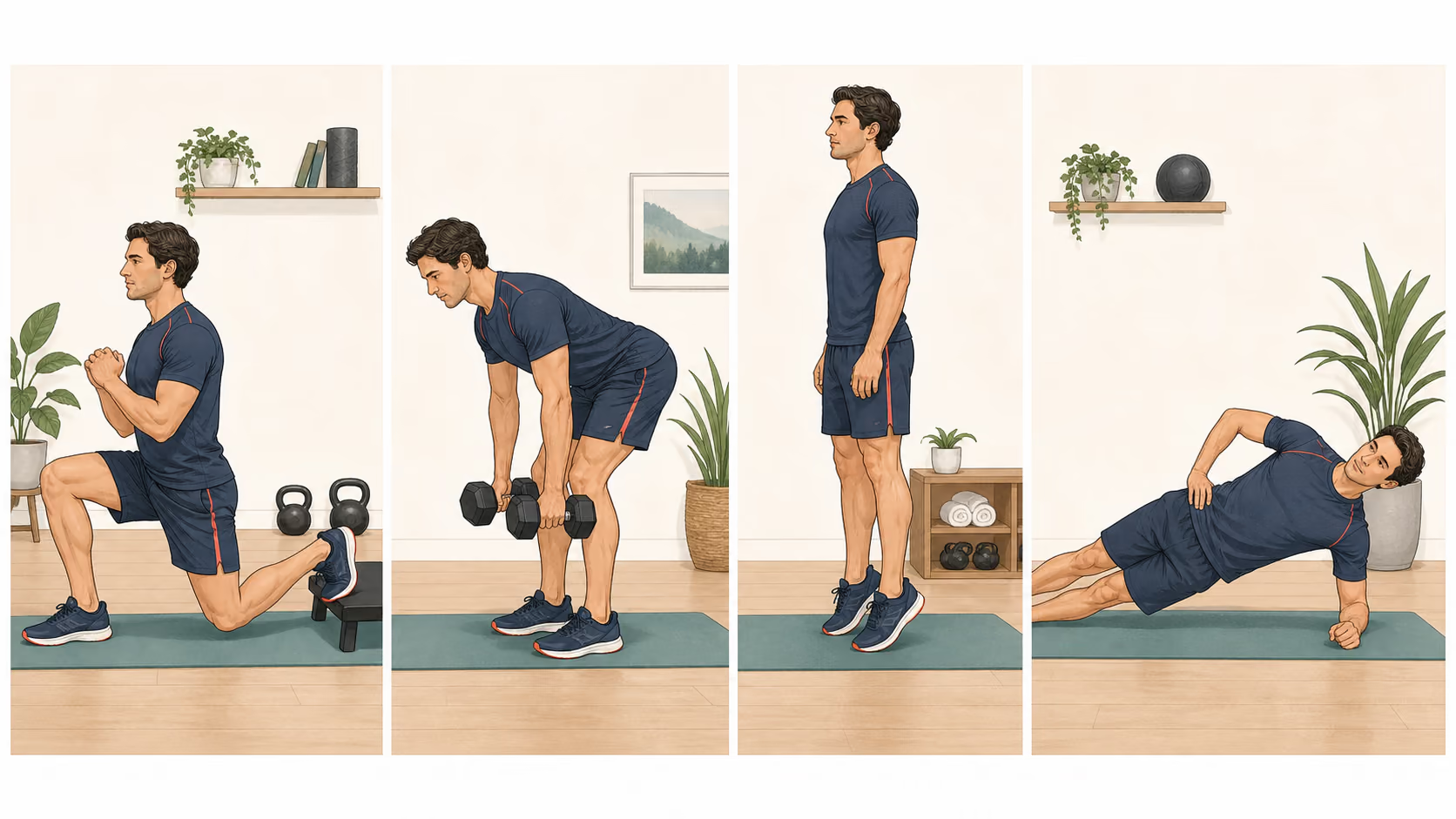
The six patterns in a runner-focused program
| Pattern | Accessible exercise | What to notice | Progression option |
|---|---|---|---|
| Knee-dominant | Split squat, reverse lunge, or step-up | Whole foot stays supported; knee tracks comfortably; torso controlled | Add load, range, or a slower lowering phase |
| Hip-dominant | Dumbbell Romanian deadlift or hip hinge | Hips move back; spine stays neutral; hamstrings load without reaching for the floor | Add load or use a single-leg kickstand stance |
| Calf—straight knee | Standing calf raise | Rise and lower through a controlled range without bouncing | Single-leg version or added load |
| Calf—bent knee | Seated or bent-knee calf raise | Knee angle remains stable while heel moves deliberately | Add load or a pause at the top |
| Push / pull | Push-up plus row or band row | Ribs and shoulder blades remain controlled | Harder angle, band, or dumbbell load |
| Trunk control | Side plank, dead bug, or suitcase carry | Breathe while resisting unwanted movement | Longer lever or modest added load |
What the evidence means in a real training week
Running economy is not the same as speed
Running economy describes the energy or oxygen cost of moving at a submaximal speed. Improving it can mean using slightly less energy at the same pace. It is one contributor to performance, alongside aerobic capacity, threshold, durability, pacing, and fuel.
The strength studies do not prove that any four exercises will make every runner faster. Many protocols last 6–24 weeks and use supervised high loads or plyometrics. Translate the principle—not the headline—into training you can execute with sound technique and gradual loading.
Specific force can coexist with endurance
Running supplies thousands of repeated low-force contacts. Strength training gives you a controlled setting to produce higher force in fewer repetitions. The point is not to mimic running with endless light reps; it is to train movement patterns with enough resistance to require attention while keeping total volume modest.
A runner new to lifting can begin with body weight or light loads to learn positions. Progress toward a load that makes the final repetitions challenging while leaving one to three technically sound repetitions in reserve.
Rest makes the dose interpretable
Training creates short-term fatigue as well as a stimulus. Recovery allows that fatigue to fall. If you constantly change sessions while under-recovered, you cannot tell whether the program is developing fitness or simply accumulating tiredness.
A rest day need not involve complete immobility. Normal walking and daily life are fine. Rest loses its purpose when it becomes an unlogged hard bike ride, intense circuit, or long hike placed beside the week's priority session.
Three strength sessions scaled to the training cycle
Warm up with 5–10 minutes of easy movement and one light practice set. The loads below should permit controlled technique. Stop a set when position changes, not only when the muscles fail.
Foundation session—about 25 minutes
Learn the patterns and establish twice-weekly consistency.
- Structure
- 2 sets each: split squat 6–8/side, dumbbell hinge 8–10, calf raise 10–15, band row 8–12, side plank 20–30 seconds/side.
- Effort
- About 6–7 out of 10 for the set; finish with 2–3 good repetitions available.
- Recovery
- 60–120 seconds between sets; longer if technique or breathing needs it.
- Progression
- First improve control, then add a small amount of load or one set—not both across every exercise.
Established runner session—about 35 minutes
Develop higher force with moderate total volume.
- Structure
- 3 sets each: squat or split squat 4–6, Romanian deadlift 5–8, heavy calf raise 6–10; then 2 sets row and suitcase carry.
- Effort
- Challenging but crisp; 1–3 repetitions in reserve and no grinding.
- Recovery
- 2–3 minutes for main lifts, 60–90 seconds for accessories.
- Progression
- Add the smallest available load when all sets remain technically consistent for two sessions.
Race-specific maintenance—15 to 20 minutes
Retain familiarity while running carries more of the weekly load.
- Structure
- 2 sets each: split squat 5/side, hinge 6–8, calf raise 8–12, side plank 20 seconds/side.
- Effort
- Moderate, with 3 repetitions in reserve; no soreness-seeking tempo or novelty.
- Recovery
- Comfortable full recovery between sets.
- Progression
- Do not progress during the final race-specific weeks; reduce to one easy set during taper if needed.
How to perform the illustrated movements
- 1
Split squat
Take a stance long enough that both feet remain stable. Lower straight down within a comfortable range while the front knee tracks over the foot. Push through the whole front foot. Start with a supported split squat before elevating the rear foot.
- 2
Dumbbell hip hinge
Soften the knees, send the hips backward, and keep the weights close to the legs. Stop when hamstring tension or your available range ends; depth is not the goal. Stand by driving the floor away and bringing hips through.
- 3
Standing calf raise
Use a wall or rack for balance. Rise through the ball of the foot without rolling the ankle outward, pause briefly, then lower under control. A floor version is valid before using a step.
- 4
Side plank
Set the elbow below the shoulder, stack or stagger the feet, and lift into a straight line you can hold while breathing. Use a bent-knee version if the full lever changes your shoulder or trunk position.
Runner scenario
Scenario: lifting soreness is ruining the workout
Devon, a four-day runner who strength trains twice weekly
His key run is Tuesday and long run Saturday. He lifts heavy lower body on Monday and Thursday, using four sets of five exercises. Tuesday intervals feel flat, and Friday easy running begins with severe soreness.
- The decision
- Devon assumes soreness proves the gym is working. In practice, both lifting sessions compromise the running sessions he cares about, and he increases neither load nor technique because every session becomes a recovery test.
- Recommended approach
- Move the more demanding strength session to Tuesday after the key run, reduce it to three main patterns and 2–3 sets, and place a shorter maintenance session Thursday after easy running. Keep Wednesday easy or off. Leave repetitions in reserve and hold the exercise selection for four weeks.
- Why
- Consolidating the main stress on Tuesday protects Monday freshness and creates more recovery before Saturday. Lower volume preserves sufficient resistance for progression without making soreness the target. If running remains the priority, its key session comes first that day.
Where strength fits in common running weeks
| Running structure | Strength placement | Why it fits | Watch for |
|---|---|---|---|
| 3 running days | After one easy run + separate short session | Several non-running days offer options | Turning every non-run day into cross-training |
| 4 running days | After workout or easy run + after another easy run | Consolidates stress and preserves true rest | Excessive lower-body volume before long run |
| 5 running days | After workout + short maintenance after easy run | Avoids creating two new hard days | Recovery run becoming a lifting marathon |
| Taper | One shortened early-week session or none late | Maintains familiarity without new fatigue | Novel exercise, high volume, or soreness close to race |
How to recognize insufficient recovery
One tired day is normal. Look for a pattern across several signals and several days.
Easy running stops feeling easy
Pace may slow while breathing and perceived effort rise. Adjust for heat and terrain first, then consider accumulated training and life load.
Performance declines across repeated sessions
One poor workout is noise. Two or three sessions with falling output despite honest pacing deserve a lower-load week.
Sleep, mood, or appetite changes
Difficulty sleeping, unusual irritability, or disrupted appetite can accompany stress. They are not diagnoses, but they belong in the training decision.
Normal movement feels altered
Heavy legs after a new lift can be expected briefly. Gait-changing pain, worsening symptoms, or difficulty with ordinary stairs calls for stopping and qualified assessment.
Motivation changes from reluctance to aversion
Not wanting to start on a rainy day is ordinary. A sustained loss of interest combined with poor recovery signals should not be answered with more discipline alone.
Rest-day options by what you need
| Need | Appropriate choice | What defeats the purpose |
|---|---|---|
| Physical unloading | No planned exercise; normal daily walking | A hard class because it is not running |
| Mental reset | Unstructured walk, social time, or complete break | Constant watch-checking and recovery scoring |
| Gentle movement | 20–40 minutes very easy cycling or walking | Turning it into a progression ride |
| Mobility comfort | 5–10 minutes of comfortable positions | Forcing range or treating stretching as required penance |
| Medical recovery | Follow clinician guidance | Using a generic article to override individualized care |
Progress strength without stealing from running
Change one exercise variable
When technique and repetitions remain consistent, add the smallest load, one or two repetitions, or one set. Do not increase all three. Runners need enough stimulus to progress, but lifting volume is easy to inflate because it feels separate from mileage.
Reduce volume as race specificity rises
Keep some intensity in familiar lifts if you tolerate it, but remove sets and accessory exercises. Maintenance requires less volume than development. The race-specific long run and workout now deserve the recovery budget.
Use plyometrics only with a reason
Jumps and hops can be useful but add impact and technical demand. Begin with low-volume, well-coached drills after basic strength and landing control are established. They are optional for completing a half marathon and should not be improvised during a high-mileage week.
Common strength mistakes and better rules
| Mistake | Better rule |
|---|---|
| Changing the circuit every session | Keep a small movement menu for 4–8 weeks so technique and load can progress |
| Using soreness as the outcome | Use controlled repetitions, load, and running quality as feedback |
| Only doing high-repetition mini-band work | Include scalable knee-, hip-, calf-, and trunk patterns |
| Lifting hard the day before the key run | Run first on priority days or move demanding lifting farther away |
| Stopping all strength during the plan | Reduce to a maintenance dose before abandoning the habit |
| Assuming strength prevents injury | Treat it as training with possible performance and capacity benefits, not a guarantee |
Build your first four weeks of strength work
- 1
Select five patterns
Choose one knee, one hip, one calf, one pull or push, and one trunk exercise.
- 2
Practice twice weekly
Use two sets at moderate effort and repeat the same menu.
- 3
Record load and repetitions
Write enough detail to know whether the session progressed.
- 4
Watch the next key run
If quality drops, reduce sets or change placement before changing every exercise.
- 5
Progress the smallest useful step
Add load or repetitions to one or two movements after technique stays consistent.
Choose load without a one-repetition-maximum test
Use repetitions in reserve
Repetitions in reserve, or RIR, estimates how many technically sound repetitions you could still complete when a set ends. Finishing with two RIR means you believe two more good repetitions were available. This is not exact science, but it is more useful than selecting a weight because it looks light or heavy.
Start conservatively. If you complete 8 split squats per side and could have done 8 more, add a small load next session. If repetition 7 changes your balance and depth, reduce the load or stop at 6. The target is repeatable force with recognizable technique.
Distinguish muscular effort from joint warning
Working muscles can feel challenged, warm, or locally fatigued. Sharp pain, a new unstable sensation, or pain that worsens across repetitions is not a cue to prove toughness. Stop the exercise and choose a comfortable variation; persistent or concerning pain needs qualified assessment.
A variation is not inferior because it uses a smaller range, support, or lighter load. It is useful when it lets you train the intended pattern with control and progress from an honest starting point.
Plan for delayed soreness
Delayed-onset muscle soreness often appears 12–48 hours after unfamiliar or high-volume lifting. Reduce the chance of severe soreness by limiting first-session sets, avoiding long slow lowering phases initially, and keeping several repetitions in reserve. Soreness can occur without indicating harm, but pursuing it interferes with running quality.
Place the first session before a low-stakes running period, not two days before the goal race or a key rehearsal. Repeat the same exercise menu so novelty falls.
A no-gym session for travel weeks
This session maintains the movement habit when equipment is limited. Use a chair or wall only if it is stable, and keep effort moderate.
20-minute travel strength
Practice single-leg control, hip work, calves, pushing, and trunk control without turning travel into a new training challenge.
- Structure
- 2–3 rounds: reverse lunge 6/side, single-leg bridge 8/side, single-leg calf raise 10/side, incline push-up 6–12, side plank 20 seconds/side.
- Effort
- Stop every movement with 2–4 good repetitions in reserve.
- Recovery
- 30–60 seconds between exercises and 2 minutes between rounds.
- Progression
- Add a round only after the session produces no meaningful soreness; return to your normal program rather than endlessly progressing the travel version.
Strength adjustments during demanding running weeks
| Running week | Keep | Reduce | Remove first |
|---|---|---|---|
| Long run increases | Familiar main lifts | One set from lower-body exercises | High-repetition accessories |
| Race-specific workout added | Moderate load and sound technique | Second session duration | Novel plyometrics |
| Tune-up race | One early-week maintenance session | Load and total sets | Late-week leg session |
| Taper | Brief familiar movement if desired | Sets, repetitions, and exercise count | Anything likely to cause soreness |
| Unusually poor recovery | Only comfortable movement | All training dose | The belief that lifting must be preserved at any cost |
Audit one exercise without turning the session into a film set
- 1
Choose one angle
Film one work set from the side or front only when it helps you see the relevant joint path. Keep other people out of frame and follow gym rules.
- 2
Check the first and last repetition
Compare range, speed, balance, and posture. A large change suggests the set was too long or heavy.
- 3
Name one cue
Use a specific action such as ‘whole foot stays down’ or ‘hips travel back.’ Five cues at once rarely improve the next set.
- 4
Change dose before inventing technique
Lower load, reduce repetitions, use support, or shorten range. Seek qualified coaching when you cannot find a comfortable controlled version.
- 5
Delete the recording
Keep only the training note you need. Technique review should improve execution, not create a library of personal footage.
A minimalist two-session week
| Session A after key run | Session B after easy run | Weekly purpose |
|---|---|---|
| Split squat 3 × 5/side | Step-up 2 × 6/side | Knee-dominant force and control |
| Romanian deadlift 3 × 6 | Single-leg bridge 2 × 8/side | Hip-dominant work with lower second-session cost |
| Calf raise 3 × 8 | Bent-knee calf raise 2 × 12 | Two calf positions across manageable volume |
| Row 2 × 8 | Incline push-up 2 × 8 | Upper-body push and pull |
| Suitcase carry 2 × 30 sec/side | Side plank 2 × 20 sec/side | Trunk control under different demands |
Put it into a plan
Turn this guidance into your next useful step.
Use a free resource to explore your options, or build a race-specific plan around your date, availability, and current fitness.
Build your plan for $19.99Keep learning
Related resources
How Many Days a Week Should You Run for a Half Marathon?
Choose a realistic number of running days for half marathon training, from a focused three-day structure to a higher-frequency routine.
Read guideHow to Adjust a Half Marathon Training Plan
A practical way to adjust half marathon workouts after a missed run, busy week, illness, travel, or an unexpectedly hard session.
Read guideHalf Marathon Recovery: What to Do After the Race
Use a calm, practical half marathon recovery plan after race day, including rest, easy movement, food, fluids, and a gradual return to running.
Read guideQuestions runners ask
- How many times a week should half marathon runners strength train?
- Two full-body sessions is a practical starting point. One session can maintain familiarity during demanding race-specific weeks, while experienced lifters may tolerate more. Start with 20–35 minutes and a small exercise menu rather than adding high-volume circuits.
- Should I lift before or after running?
- When the run is the day's priority, run first. Pairing strength after a workout or easy run can consolidate stress and preserve full rest days. If lifting has equal priority, separate sessions by several hours when practical and monitor whether either session loses quality.
- Should runners lift heavy or use light weights?
- Research suggests high-load and combined methods can improve running economy in some trained runners, but beginners need technique and gradual exposure first. Use a load that makes the set challenging while leaving 1–3 sound repetitions in reserve. Endless light repetitions are not automatically more running-specific.
- Do I need squats and deadlifts?
- You need movement patterns, not compulsory barbell lifts. Split squats, step-ups, goblet squats, dumbbell hinges, and other variations can train the same broad functions. Choose exercises you can perform and progress with available equipment and appropriate instruction.
- How many rest days do runners need?
- There is no universal number. Many recreational plans include one to four non-running days depending on frequency. Judge session dose, training history, sleep, life load, and repeated recovery signals. Preserve a flexible low-load day when you add mileage or strength.
- Should I strength train during taper week?
- A short familiar session early in the taper may be fine for established lifters, but reduce sets and avoid novelty or soreness. Many runners skip lower-body strength in the final days. The taper is not the time to create a new stimulus.
Sources and methodology
This guide is educational, not medical advice. It is written from general training principles and linked primary or official references; use judgment for your own conditions and consult a qualified professional for individual health concerns. Read our editorial methodology.
- ACSM's Guidelines for Exercise Testing and Prescription — American College of Sports Medicine. General exercise-training principles and progression guidance.
- Physical Activity Basics — Centers for Disease Control and Prevention. Public-health guidance on physical activity and its role in health.
- Effect of Strength Training Programs in Middle- and Long-Distance Runners' Economy at Different Running Speeds: A Systematic Review with Meta-analysis — Sports Medicine. Analysis of 652 runners across programs lasting 6–24 weeks, including method-specific effects and evidence limitations.
- How Much Is Too Much? (Part 2): International Olympic Committee Consensus Statement on Load in Sport and Risk of Illness — British Journal of Sports Medicine. Consensus guidance on individualized monitoring of training, recovery, and non-sport stress, primarily from competitive-athlete evidence.