Half marathon guide
How Long to Train for a Half Marathon
Most runners benefit from 10 to 16 weeks of half marathon preparation. A runner with a steady base may use a shorter block; a first-time runner or someone returning after time away usually benefits from more time to establish routine and build the long run gradually.
The short answer
Most runners benefit from 10 to 16 weeks of half marathon preparation. A runner with a steady base may use a shorter block; a first-time runner or someone returning after time away usually benefits from more time to establish routine and build the long run gradually.
How many weeks do you need to train for a half marathon?
Most race-specific half marathon plans last 8–16 weeks, but your real preparation time begins before the plan if you do not yet run consistently. A runner who already covers 20–25 miles across four days with an 8-mile long run can use a shorter block very differently from someone whose last month contains a few scattered 2-mile runs. The right duration is the shortest calendar that lets the opening week feel familiar and the later weeks become specific without forcing abrupt jumps.
Training duration is the time available to build, practice, absorb, and adjust—not merely the number of boxes before race day. Longer is useful when it creates repeat weeks, gradual long-run development, and room for ordinary disruptions. Longer is not automatically better if the plan asks you to stay near peak load for months or you lose focus because the early weeks lack purpose.
Use three pieces of evidence: your last four to six weeks of running, the demands of the plan's first two weeks, and the number of uninterrupted weeks before the race. Work backward from race day, then test the front of the plan against the runner you are now.
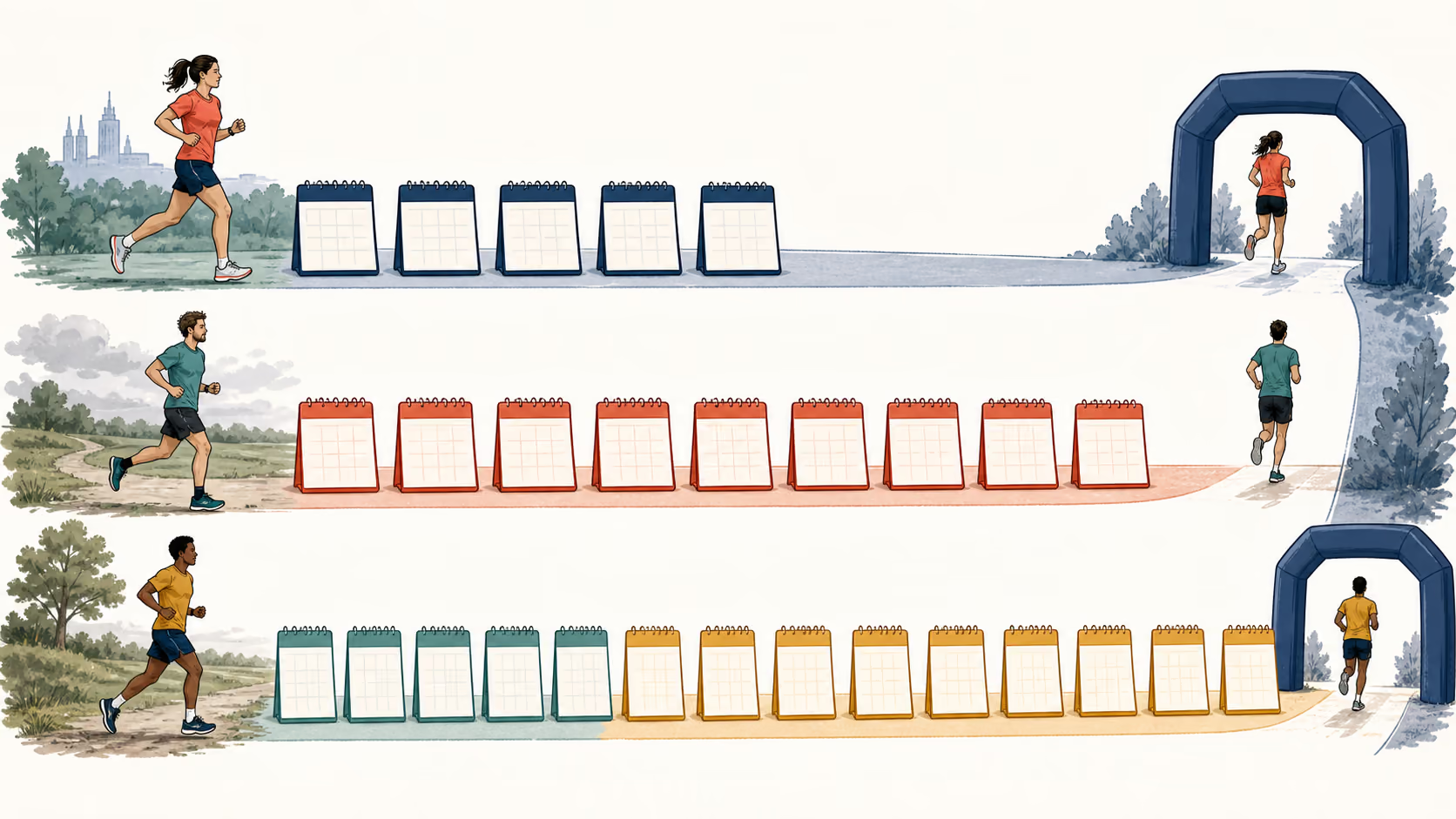
Choose a starting range from your current routine
| Recent running pattern | Likely preparation runway | What the early weeks should emphasize | Reason to choose more time |
|---|---|---|---|
| No regular running or fewer than 2 outings most weeks | Base building first, then 12–16 race-specific weeks | Walk-run frequency, easy effort, and routine | The event date would force long runs to grow before frequency is stable |
| 2–3 regular days, roughly 6–12 miles weekly, longest run 3–5 miles | 14–20 total weeks | Stabilize three days and extend one run gradually | Normal soreness or schedule disruption regularly cancels the next run |
| 3–4 days, roughly 12–20 miles weekly, longest run 5–7 miles | 12–16 weeks | Build volume modestly before adding much race-specific work | The target plan begins above your recent high week |
| 4–5 days, roughly 20–35 miles weekly, longest run 7–10 miles | 8–12 weeks | Specific workouts, long-run refinement, and rehearsal | Recent consistency is shorter than the plan assumes |
| Established higher-volume runner between race blocks | 8–12 weeks, sometimes less with coaching context | Recover from the prior cycle, then target event demands | The race follows illness, injury, or a major life interruption |
What 8-, 12-, and 16-week plans are designed to do
The labels describe available runway, not difficulty levels. A 16-week advanced plan can be harder than an 8-week beginner plan.
Eight weeks: sharpen an existing base
An 8-week plan is usually a compact race-specific block. It can refine long runs, introduce or maintain threshold work, practice race effort, and taper. It has little room to create a running habit from scratch. If the plan opens with four days and a 7-mile long run, you should already be comfortable with something close to that pattern. Use the 8-week intermediate plan as a concrete example of the opening workload a short block may assume.
A single disrupted week consumes a large share of the block. Choose eight weeks when you can accept that the schedule may need simplification rather than trying to replace lost time with compressed mileage.
Twelve weeks: enough time to build and specialize
Twelve weeks works for many consistent recreational runners because it allows several weeks of general progression, several weeks of more specific work, and a taper. It also provides enough repetitions to learn whether your selected running days and long-run progression fit real life. Compare that description with the actual first weeks of the 12-week intermediate plan, then judge the schedule from your current routine rather than its label.
It is not a beginner guarantee. A 12-week schedule that starts far above your normal mileage is still a poor match. Add base-building time before week one instead of weakening every session after the plan begins.
Sixteen weeks: develop the routine with more margin
Sixteen weeks can suit a newer runner, a cautious returner, or someone whose life calendar requires repeat weeks. The extra month can support modest mileage changes and technique or strength habits before the most specific long runs arrive. The 16-week beginner plan shows how that extra runway can distribute the work without turning every early week into a peak week.
The risk is unnecessary escalation. Do not use four extra weeks to add four extra peak weeks. Early weeks should have their own job, and recovery weeks should interrupt the build before fatigue becomes the only evidence that training is happening.
Calculate your personal training runway
- 1
Count backward from race day
Reserve the final 10–14 days for reduced volume. Then mark travel, holidays, demanding work periods, and other races. A nominal 12-week calendar may contain only nine reliable training weeks.
- 2
Find your repeatable baseline
Average the last four ordinary weeks for running days and mileage. Note the longest run that did not damage the following week. Do not use a personal-best week as the baseline.
- 3
Read the first two weeks line by line
Compare frequency, long run, workout type, and total volume. If two or more variables jump immediately, add a preparation block or choose a different plan.
- 4
Estimate the development gap
List what must change: perhaps one extra running day, a long run from 5 to 10 miles, fueling practice, and comfort with controlled threshold work. Each change needs repeated exposure, not one checkbox.
- 5
Add contingency without inventing filler
One or two flexible weeks can absorb travel or a repeated load. Give them a purpose: hold volume, repeat a stable long run, or restore consistency. Avoid extending the calendar with aimless hard sessions.
Runner scenario
Scenario: an appealing race is only ten weeks away
Andre, a first-time half marathoner with an active lifestyle
He cycles twice a week and runs two 3-mile outings most weeks. His longest run in the last three months is 4.5 miles. A local half marathon is ten weeks away, and the published cutoff allows a brisk walk-run finish.
- The decision
- His general fitness makes the event feel possible, but cycling fitness does not give him ten weeks of impact exposure. An online plan reaches a 10-mile run by week seven and adds speed work immediately.
- Recommended approach
- Treat the event as optional rather than guaranteed. For the first three weeks, use three nonconsecutive walk-run outings with a conservative long session that grows by time. Keep cycling easy and remove formal speed work. At the end of week three, assess whether frequency, normal walking, and the long session remain comfortable. If not, choose a later race; if yes, continue with a finish-oriented walk-run plan and respect the cutoff.
- Why
- The decision checkpoint protects Andre from committing to a progression before he has evidence that running frequency is tolerable. It also separates cardiovascular confidence from tissue exposure. Ten weeks may be workable for a conservative walk-run attempt, but the date does not earn priority over clear warning signs or medical concerns.
Red flags that a plan is too short
| What you see | What it means | Better response |
|---|---|---|
| Opening weekly mileage is more than your recent high | The plan starts with progression rather than continuity | Add base weeks or select a lower-volume plan |
| The first long run exceeds your routine long run by several miles | The most demanding session arrives before preparation | Begin at the routine distance and progress by time or small distance changes |
| Frequency rises by two or more days immediately | Impact exposure and scheduling both change at once | Add one short easy day first |
| Missed sessions must be made up to reach the peak | There is no contingency margin | Accept a lower peak or move to a later race |
| The taper begins as soon as the long run becomes tolerable | There was too little time to repeat and absorb the work | Choose more runway next cycle even if you still race conservatively |
Why beginners often need a base before the countdown
A base is not a vague season of slow running. It is a period in which frequency, easy effort, and a modest long run become normal enough to support more specific work. A runner has a usable base when most scheduled outings happen, easy running remains easy, the long run does not monopolize recovery, and small changes do not immediately unravel the week.
Cardiovascular fitness can improve faster than the practical ability to tolerate repeated running. This mismatch is common among cyclists, rowers, field-sport athletes, and returning runners: breathing feels capable, so pace rises before the running habit is established. Base weeks limit that temptation by making the goal repeatability rather than performance.
There is no single base-mileage threshold. A finish-oriented walk-run athlete and an experienced time-focused runner need different platforms. Define the base by the opening demands of the chosen plan and the event goal, not by someone else's weekly total.
When more weeks are the wrong solution
Adding calendar time does not fix every planning problem. It can preserve the same mismatch for longer.
The plan is too advanced
A 20-week version of a schedule with five running days still does not suit someone who can reliably run only three. Change the structure, not merely the start date.
The goal pace is disconnected from current fitness
More weeks cannot guarantee a specific finish time. Use a recent representative performance and controlled workouts to set a realistic range, then revisit it later.
The calendar contains no recovery
A longer linear build can create more accumulated fatigue. Use holding weeks and reduced-load weeks rather than progressing from start to taper without interruption.
The race date drives unsafe urgency
If pain changes gait, illness persists, or you cannot meet the first weeks without repeated breakdown, selecting a later event is more useful than stretching a compromised plan.
A worked 16-week outline for a consistent newer runner
| Weeks | Primary job | Long-run direction | Quality emphasis |
|---|---|---|---|
| 1–3 | Stabilize 3–4 running days | Hold near 5–6 comfortable miles | Strides or short gentle hills only |
| 4 | Reduced load and review | Shorter than week 3 | No need to prove fitness |
| 5–7 | Build easy volume | Progress toward 7–8 miles | Short controlled tempo intervals |
| 8 | Hold or reduce | Repeat a manageable distance | Simplify if life load is high |
| 9–11 | Race-specific endurance | Progress toward 9–10 miles | Controlled race-effort segments or cruise intervals |
| 12–13 | Rehearse | One key long run with tested fuel | Practice pacing, not a time trial |
| 14 | Last substantial week | Stable rather than dramatically longer | Brief familiar quality |
| 15–16 | Taper and race | Volume falls | Short familiar touches; no cramming |
What to do if you have less time than recommended
- 1
Lower the outcome demand
Shift from an aggressive time target toward even effort, a planned walk-run strategy, or simply a supported training run if event rules allow.
- 2
Do not skip to the plan's calendar date
Start near your current load. The body does not know that the downloadable schedule says week six.
- 3
Remove optional intensity first
Protect easy frequency and a measured long-run progression. Speed sessions cannot replace missing endurance weeks.
- 4
Set a go/no-go checkpoint
Choose a date before registration deadlines or deferral windows. Review long-run response, consistency, cutoff feasibility, and any health concerns honestly.
- 5
Use deferral when the evidence says no
A later race creates a better training decision. It does not erase the useful base you have begun building.
Adjust the runway for age, history, and life—not stereotypes
Returning runners have fitness and gaps at the same time
A previous half marathon gives you useful knowledge about pacing, equipment, and what later miles feel like. It does not make old mileage current. After months or years away, base the opening load on recent running and use past experience to improve decisions rather than justify a shortcut.
Returners often regain aerobic confidence before their week becomes durable. Hold early mileage after it starts to feel easy; that is when impatience is most likely to turn one positive run into several simultaneous increases.
Older runners do not all need the same extra weeks
Chronological age alone cannot set plan length. Training age, strength history, sleep, health, and recovery response matter. Some masters runners thrive on frequent easy running; others prefer more non-running days. Add time when it creates room for your observed recovery pattern, not because a generic chart assumes decline.
Health screening and medication questions belong with qualified clinicians. A longer plan is not a substitute for medical clearance when it is indicated.
Busy seasons should alter the plan before they arrive
A tax accountant racing in April, a teacher racing in September, or a parent racing near a family milestone faces a predictable load. Put stable or reduced weeks around those dates. If the busiest period overlaps the peak and taper, a different race may provide a better experience than constant emergency editing.
Calendar honesty is a performance skill. The week you can complete during a busy season is more valuable than the week you intend to rescue every Sunday night.
A calendar-math example
| Calendar item | Weeks affected | Planning consequence |
|---|---|---|
| Race is 15 weeks away | 15 available | Starting number, not the usable total |
| Final taper | 2 weeks | Leaves 13 building and rehearsal weeks |
| Five-day work trip | 1 week | Make it a hold/reduced week; do not count on a key long run |
| Family weekend | 1 long-run day | Move the long run earlier only if recovery spacing works |
| One contingency week | 1 week | Can repeat a stable load after minor disruption |
| Usable progression | About 10–11 weeks | A nominal 15-week runway behaves more like an 11-week build plus taper |
Questions to answer before you commit to a short plan
Can you already complete the first long run?
Completing it once is not enough; it should fit your normal week without several disrupted days.
Have you held your current frequency?
Look for at least several weeks of the same running-day pattern, not two enthusiastic weeks.
Does the plan have a reduced-load week?
A compact plan still needs room to absorb work. Continuous escalation makes any disruption harder to handle.
Are the workouts familiar?
A short block should refine threshold, hills, or strides you can already execute. It should not teach every training method at once.
Can your life support the peak?
Read the actual dates for the longest runs, not only the generic week numbers.
Will you lower the goal if evidence changes?
A short plan has less time for fitness and fewer chances to confirm the target. Enter with a decision rule, not only optimism.
If the race is close, choose among four honest options
| Option | Use when | Training consequence | Race-day consequence |
|---|---|---|---|
| Proceed with original goal | Opening load is familiar and recent consistency is strong | Use a compact specific block; no cramming | Race the practiced pace and fuel plan |
| Proceed with a finish goal | Base is adequate but specific preparation is limited | Prioritize easy endurance and rehearsal | Start conservatively; use planned walk breaks if helpful |
| Treat it as a supported long effort | Event rules allow and you can stay well inside the cutoff | Keep training conservative | No finish-time target; stop if the day stops being appropriate |
| Defer or choose another race | Opening load is unrealistic, health concerns exist, or cutoff cannot be met | Continue base building without countdown pressure | Use the later event to complete a full progression |
Why a checkpoint beats a promise
When preparation time is uncertain, set a decision date two to four weeks into training. Define the evidence in advance: perhaps three consistent running days, a 75-minute long outing that does not disrupt the next week, and no gait-changing pain. The checkpoint prevents registration excitement from rewriting the evidence each Sunday.
Include event facts. Confirm course cutoff, wave start, deferral, transfer, and medical policies on the organizer's official site. A runner prepared for a 3-hour walk-run cannot assume every event keeps roads, aid stations, and timing open that long.
If the checkpoint fails, the early weeks still count. They are a base for the later race. The useful outcome of the short calendar may be discovering the pace at which training becomes repeatable.
Put it into a plan
Turn this guidance into your next useful step.
Use a free resource to explore your options, or build a race-specific plan around your date, availability, and current fitness.
Check your readinessKeep learning
Related resources
Half Marathon Training Phases Explained
See how base, build, peak, taper, and race weeks work together in a half marathon training plan.
Read guideAre You Ready to Train for a Half Marathon?
Use a practical readiness checklist to decide whether to begin half marathon training and how much time to allow.
Read guideWhat 8-, 12-, and 16-Week Half Marathon Training Really Look Like
Compare 8-, 12-, and 16-week half marathon training timelines by starting fitness, progression room, and practical tradeoffs.
Read guideQuestions runners ask
- Can a beginner train for a half marathon in 12 weeks?
- Some beginners can, especially if they already run three days per week and have a comfortable 4–6 mile long run. Someone starting from no running often needs base-building time before the 12-week race-specific block. Check the first week against current frequency and longest routine run rather than relying on the word beginner.
- Is eight weeks enough if I can already run a 10K?
- Potentially. A recent 10K shows useful fitness but does not reveal weekly frequency, long-run history, or recovery. Eight weeks is more plausible if you have run consistently for several months and the opening long run is familiar. It is less plausible if the 10K was an isolated effort after irregular training.
- How long does couch-to-half-marathon training take?
- Plan for a base-building period plus a race-specific block—often several months in total. The exact duration depends on how quickly three regular walk-run or easy-running days become comfortable. Choose a race after the routine begins to hold, rather than using a date to force the progression.
- Can I train for too long?
- Yes. A plan can become stale when it keeps increasing load, holds peak work too long, or lacks distinct purposes. A longer calendar should contain base development, reduced-load weeks, specific rehearsals, and a taper—not months of uninterrupted escalation.
- What if I miss one week in a 12-week plan?
- Do not compress the missed sessions. Resume with a stable or reduced week, depending on why you missed it and how you feel. One week is easier to absorb in a 12- or 16-week plan than an 8-week block. Persistent illness or pain requires individualized assessment.
- Should I wait to register until I can run a certain distance?
- You do not need to run 13.1 miles first. Registration can motivate some runners, but check cutoff rules, deferral options, and whether the opening training load fits. If a nonrefundable date would pressure you to ignore clear warning signs, choose a flexible or later event.
Sources and methodology
This guide is educational, not medical advice. It is written from general training principles and linked primary or official references; use judgment for your own conditions and consult a qualified professional for individual health concerns. Read our editorial methodology.
- ACSM's Guidelines for Exercise Testing and Prescription — American College of Sports Medicine. General exercise-training principles and progression guidance.
- Physical Activity Basics — Centers for Disease Control and Prevention. Public-health guidance on physical activity and its role in health.
- Training volume and longest endurance run related to performance and running injuries — Scandinavian Journal of Medicine & Science in Sports. Observational study of recreational half-marathon and marathon runners.
- How Much Is Too Much? (Part 2): International Olympic Committee Consensus Statement on Load in Sport and Risk of Illness — British Journal of Sports Medicine. Consensus guidance on individualized monitoring of training, recovery, and non-sport stress, primarily from competitive-athlete evidence.