Half marathon guide
Half Marathon Gear for Beginners
Beginner half marathon gear should reduce distractions, not create them. Prioritize shoes that feel comfortable over easy runs, clothing you have tested in similar weather, and a simple way to carry any fuel or fluids you plan to use.
The short answer
Beginner half marathon gear should reduce distractions, not create them. Prioritize shoes that feel comfortable over easy runs, clothing you have tested in similar weather, and a simple way to carry any fuel or fluids you plan to use.
A beginner half marathon kit should remove decisions
You need less half marathon gear than marketing suggests: comfortable running shoes, socks and clothing tested over longer runs, weather-appropriate protection, and a reliable way to carry any fluid or fuel your race plan requires. A watch, carbon-plated shoes, hydration vest, and elaborate recovery devices are optional.
The word tested matters more than the word technical. An ordinary shirt that stays comfortable for ninety minutes is a better race choice than a premium top still in its packaging. A basic digital watch you can operate while moving is more useful than a new GPS model whose alerts you do not understand.
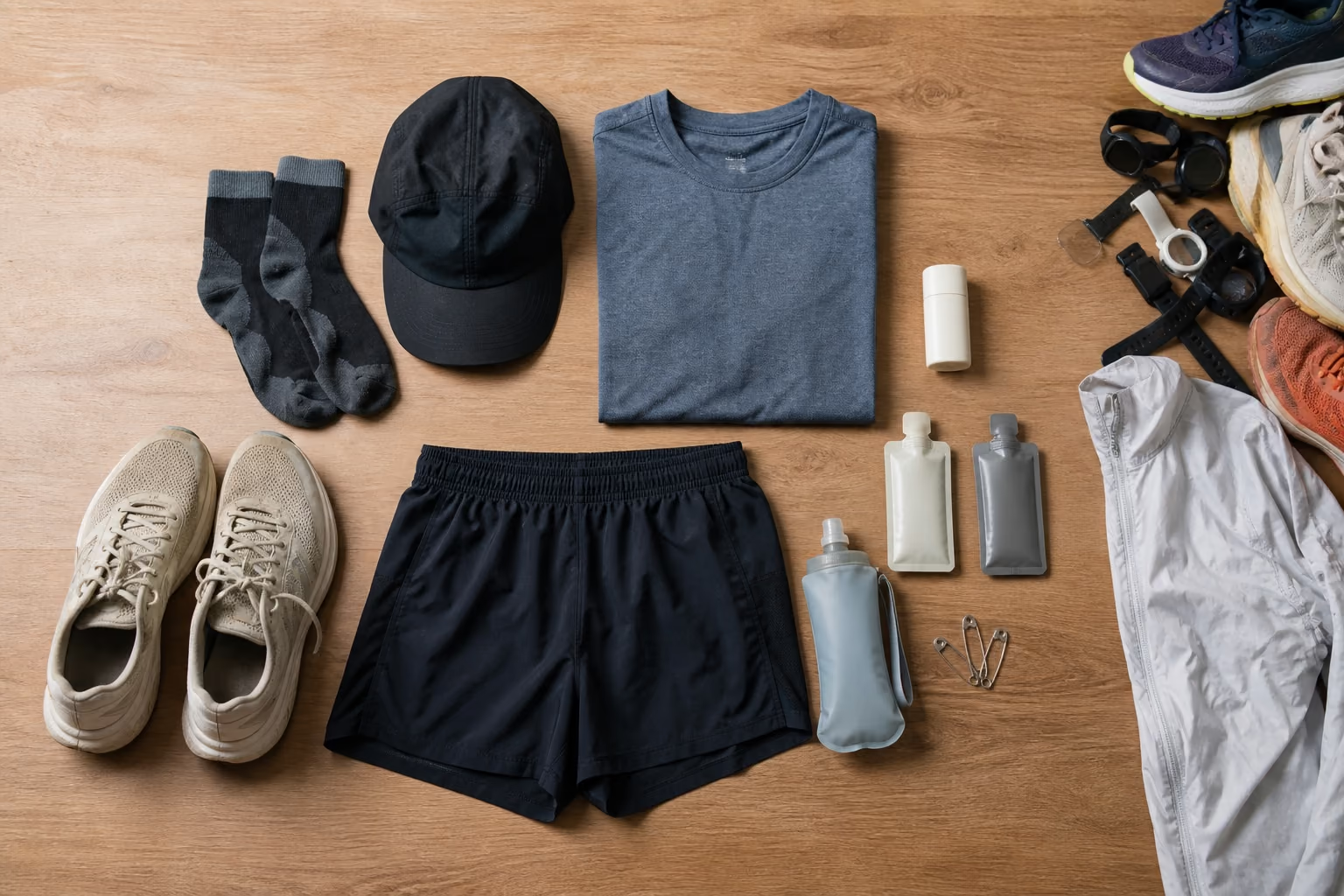
Think of gear as a system. Shoes interact with socks. Shorts determine what you can carry. Race weather changes layers. Aid-station products determine whether you need your own fuel. Test combinations in training, but change one important item at a time so you can identify what works.
This guide does not prescribe a shoe for a medical condition or diagnose pain. Fit and comfort can be assessed in training; persistent pain or altered movement requires appropriate individualized help, not a different internet shopping list.
Buy now, test later, or skip
| Item | Beginner priority | Decision rule |
|---|---|---|
| Running shoes | Essential | Comfortable during ordinary and longer runs; no race-morning first wear |
| Running socks | Essential | Stay in place and do not create rubbing when damp |
| Comfortable running clothes | Essential | Match conditions and remain comfortable for planned duration |
| Phone/ID/safety visibility | Context-dependent essential | Required by route, personal safety plan, or event rules |
| Fuel/fluid carrying system | Depends on route and race support | Carry only what aid stations and access do not reliably provide |
| GPS watch | Optional | Useful if it simplifies time/intervals; unnecessary if it encourages pace chasing |
| Hydration vest | Optional | Useful for unsupported routes; excessive for a well-supported race if unneeded |
| Race-specific super shoe | Optional | Only after fit, stability, cost, and rehearsal justify it |
| Recovery gadgets | Optional | Do not replace sleep, food, rest, or appropriate care |
Shoes: comfort first, category second
How a running shoe should feel
A useful shoe holds the heel without excessive slipping, gives the toes room to move, and feels comfortable at your normal running pace. Your foot should not need to adapt to obvious pressure because a salesperson or online chart says the model is correct.
Try shoes with the socks you plan to use. Walk, jog if the store allows, and compare more than one model. Size labels vary, so treat the number as a starting point rather than proof of fit.
Do beginners need stability shoes?
Stability is a design category, not a diagnosis. Some runners find guidance features comfortable; others prefer neutral models. A brief visual assessment or arch label alone cannot determine which shoe prevents injury.
Choose from models that feel natural and stable to you, then introduce the pair on short easy runs. If pain persists or gait changes, seek qualified assessment instead of rotating through increasingly prescriptive shoes.
How many pairs?
One reliable pair is enough to begin. A second can help when the first is wet, nearing replacement, or when you want a tested backup for race travel. Rotation is optional, not a beginner requirement.
Replace shoes based on changes you can observe—worn outsole, compressed or uneven feel, damaged upper, or declining comfort—rather than one universal mileage number. Model, runner, surface, and use vary too much for a guaranteed expiration point.
Test a new pair without gambling the week
- 1
Wear them indoors briefly
Confirm basic fit and lacing while preserving the store's return conditions. Check heel hold and toe space.
- 2
Use a short easy run
Choose a familiar route with an early exit. Do not combine new shoes with a new workout or longer distance.
- 3
Inspect during and after
Notice pressure, slipping, rubbing, and whether your stride feels natural. Check socks and skin after removing them.
- 4
Repeat before going long
One comfortable outing is encouraging, not conclusive. Use the pair on several routine runs before a substantial long run.
- 5
Complete a race-kit rehearsal
Wear the shoes with race socks, clothing, and carrying setup on a long run. Keep race week for familiar use, not break-in.
Socks, shorts, tops, and anti-chafe choices
Socks
Running socks should stay in place, fit without folds, and work with the shoe's available space. Fabric that manages moisture can be more comfortable than everyday cotton for longer or wet runs, but construction and fit matter as much as the fiber label.
Test sock height against the shoe collar and weather. If you use toe socks or compression, treat them as distinct changes and introduce them before the longest rehearsals.
Bottoms and support
Choose shorts or tights that do not ride, bind, or become heavy when wet. Check pockets while they hold the exact phone, keys, or fuel you expect to carry. A pocket that feels fine standing may bounce after ten minutes.
Sports bras and other support garments need long-run testing too. Look for stable support without rubbing or restricted breathing. Fit is personal; the label's support category is only a starting point.
Tops and chafing prevention
Seams, damp fabric, race-bib pins, and repeated arm swing can cause rubbing over time. Wear the exact top for a longer session and test anti-chafe product on known friction areas according to its instructions.
Do not apply a new product everywhere on race morning. Skin sensitivity and fabric interaction vary. Keep critical comfort steps in the written race checklist so excitement does not erase them.
Dress by conditions, then test while moving
| Condition | Useful options | Common error |
|---|---|---|
| Warm/sunny | Breathable light clothing, cap/visor, tested sun protection | Overdressing because the start corral feels cool |
| Cool | Light removable layer, gloves or head coverage if tested | Choosing a heavy layer with no carrying plan |
| Rain | Brimmed cap, anti-chafe, socks/shoes tested wet, pre-start shell | Wearing an unvented waterproof jacket for the entire race without rehearsal |
| Wind | Close-fitting layer and effort-based pacing | Adding loose layers that flap or overheat |
| Dark training | Reflective/visible elements and appropriate light | Assuming a bright shirt is enough for drivers to see |
| Cold start, warmer finish | Discardable pre-start layer where race permits; packable tested option | Throwing clothing outside designated donation areas |
Carrying fuel, fluid, phone, and identification
Begin with the race's support
Read the official aid-station locations and products. If water appears frequently and you are comfortable using cups, you may not need to carry a large reservoir. If stations are sparse, the course is hot, or you use a specific drink, a handheld, belt, or vest may be useful.
Historical weather is planning context, not a forecast. Use the half marathon weather strategy to translate temperature, humidity, wind, and rain into pacing and kit decisions. Make the final carrying choice from current conditions, organizer updates, and what you have practiced.
Handheld, belt, or vest
A handheld is simple and easy to refill but occupies one hand. A belt keeps hands free but can bounce. A vest distributes more fluid and gear but adds warmth and may be unnecessary for supported road racing.
Load each option with the real contents during testing. A nearly empty vest and a full vest are different systems. Check race rules because some events restrict bags or reservoirs.
Phone and ID
Training routes may make a phone, identification, payment card, or medical information prudent. Carry them securely and protect electronics from sweat or rain.
Race-day bag checks and emergency-contact rules vary. Follow the organizer's current instructions rather than assuming your training setup is automatically permitted.
Runner scenario
Scenario: Taylor wants a vest for race day
Taylor, preparing for a supported city half marathon
The course offers water roughly every 2 miles. Taylor tolerates the event's drink in training but carries a phone and four gels. A new vest feels secure on a 20-minute jog.
- The decision
- Taylor plans to wear it in the race without a loaded long-run test because serious runners seem to use vests.
- Recommended approach
- First test whether shorts pockets or a slim belt hold the required items. If choosing the vest, load it exactly and wear it on a substantial long run in similar weather. Confirm event rules.
- Why
- The vest solves no demonstrated fluid problem and may add heat or rubbing. The decision should follow carrying needs and rehearsal, not category identity.
Watches and headphones: useful only when they simplify
What a watch needs to do
For many beginners, elapsed time and a run-walk timer are enough. GPS pace can help review training, but instant pace often jumps and can encourage unnecessary corrections. Use lap or overall pace when a steadier view is useful.
Practice charging, locking buttons, starting, lapping, and ending the activity. Turn off unfamiliar alerts before race day and know whether the battery lasts for your expected time plus pre-start waiting.
Headphone safety and race rules
Some races restrict headphones; others permit them but require awareness. Check current rules. Bone-conduction or one-ear use may improve awareness but does not remove the need to hear course instructions and nearby runners.
On training routes, prioritize traffic and personal safety. Keep volume low and avoid using music to force a pace that effort does not support.
What belongs in a race-morning bag
Primary kit
Tested shoes, socks, bottoms, top, support garments, anti-chafe, and weather items. Wear as much as practical to avoid leaving essentials in the bag.
Fuel and fluids
Carry only the products and quantities rehearsed with your half marathon fueling plan, using a method allowed by the event. Do not rely on expo samples.
Race access
Bib or digital credential, pins or belt, identification, transit pass, and organizer instructions saved offline where useful.
Pre- and post-race layers
A permitted warm layer for waiting and dry clothing for afterward, labeled if using bag check.
Small backups
One familiar spare fuel, spare socks if conditions warrant, simple blister cover or bandage, and a charging cable for travel—not a second version of every item.
Run a complete dress rehearsal
- 1
Choose a meaningful long run
Use the kit when duration is long enough to reveal bounce, rubbing, heat, and access problems—but not for the first time on the peak run.
- 2
Match likely conditions where possible
Test warm-weather pieces in warmth and rain choices in wet training. Never create unsafe exposure merely to simulate a forecast.
- 3
Load everything
Fill the bottle or vest, put the phone in its pocket, pin an old bib or paper of similar size, and carry all planned fuel.
- 4
Practice access while moving
Retrieve fuel, drink, replace items, remove a layer, and use watch controls without stopping in the middle of the path.
- 5
Write the final kit list
Record exact items and locations. Change only the failed component, then retest it before race day.
A practical beginner budget
| Spend priority | Worth paying for | Where to economize |
|---|---|---|
| 1 | Comfortable shoes that fit | Last season's color; reputable discounted model |
| 2 | Socks/support/clothing that prevents recurring discomfort | Use tested items already owned |
| 3 | Safety visibility or weather protection required by your routes | Simple light/reflective pieces rather than feature-heavy gadgets |
| 4 | Fuel/fluid carrying method proven necessary | Race aid stations, fountains, or basic handheld where suitable |
| 5 | Optional data and convenience | Phone timer or inexpensive watch before premium GPS |
Travel changes the gear problem
Keep essentials in your control
When flying, wear or carry your race shoes, primary kit, medication, fuel, and race credentials rather than checking them. Checked luggage can be delayed; a favorite foam roller can be replaced locally, but an untested pair of shoes cannot become tested overnight.
Take a photo of the complete layout and the packed bag. The image is a verification tool, not a substitute for a written list. Check airline liquid rules and event security policies before packing bottles or anti-chafe products.
Do not turn the expo into an equipment change
Expos are built around novelty. Collect information and samples for later, but use the products carried through training. A discounted shoe or unfamiliar gel is not improved by being associated with race weekend.
If an essential item is lost, replace it with the closest familiar option and test it on a short shakeout where appropriate. Simplify other variables rather than compensating with several purchases.
Pack for waiting as well as running
A runner may spend an hour in a cold or wet start area before moving. Bring a permitted warm layer, rain protection, and simple food according to the organizer's bag rules. Decide what happens to each item when the corral closes.
Post-race clothing should be dry and easy to put on. Label the bag and avoid packing valuables the organizer tells you not to check.
The one-week gear freeze
| Category | Keep fixed | Permitted last-minute response |
|---|---|---|
| Shoes and socks | The tested pairing and lacing | Use a tested backup if the primary pair is damaged |
| Clothing | Tested core outfit | Add/remove a tested weather layer based on current conditions |
| Fuel | Brand, flavor, amount, and carrying location | Carry a familiar spare; do not use expo samples |
| Hydration | Rehearsed station/carrying plan | Adjust quantity for official weather guidance within practiced options |
| Watch/phone | Displays, alerts, apps, and charging routine | Disable a failing optional feature; use simple elapsed time |
| Anti-chafe/sun | Tested product and application areas | Follow conditions using only products already tolerated |
Maintain equipment without inventing rituals
Let wet shoes dry in moving air at room temperature; remove insoles if the manufacturer allows and avoid high heat that can damage materials. Rotate into a tested backup when drying time is short. Wash technical clothing according to its label and check pockets before the next run.
Charge electronics on a recurring day and again before travel. Update watch software well before race week or postpone the update; a new interface is still a new variable. Replace batteries in safety lights when brightness falls rather than waiting for complete failure.
Review consumables every two weeks: fuel expiration, anti-chafe, sunscreen, and any drink mix. Buy enough familiar product before race travel, but avoid stockpiling so much that a preference change becomes waste.
Keep a small repair boundary. Re-lacing, tightening a belt, or replacing a safety pin is reasonable. Modifying shoe structure, sewing a rubbing seam on race eve, or relying on improvised adhesives creates uncertainty. Use a tested alternative when a core item fails.
Put it into a plan
Turn this guidance into your next useful step.
Use a free resource to explore your options, or build a race-specific plan around your date, availability, and current fitness.
Browse free training plansKeep learning
Related resources
Your First Long Run: A Beginner’s Guide
Prepare for your first half marathon long run with easy effort, route planning, fueling practice, and a manageable progression.
Read guideHalf Marathon Weather Strategy
Prepare for heat, cold, rain, and wind in a half marathon by adapting effort, clothing, fluids, and expectations to race-day conditions.
Read guideHalf Marathon Fueling Plan: What to Practice
Create a simple half marathon fueling plan by practicing carbohydrates, fluids, timing, and race-day routines during training.
Read guideQuestions runners ask
- What gear do I absolutely need for a half marathon?
- Tested running shoes, comfortable socks and clothing, any required race credential, and condition-appropriate protection are the core. Fuel, fluid, phone, and carrying gear depend on your duration, course support, and race rules. Everything else should solve a specific demonstrated problem.
- Do I need special half marathon shoes?
- No. A comfortable daily running shoe used successfully on long runs can be a race shoe. Faster plated models are optional and still require testing. Do not trade known comfort and stability for an unfamiliar technology on race morning.
- How many miles should I put on shoes before race day?
- There is no required break-in mileage. Modern shoes should feel comfortable from the start, but use them on several runs including a meaningful longer rehearsal. That tests fit, socks, lacing, and how the shoe feels as feet warm or swell.
- Should I carry water during the race?
- Check aid-station spacing, expected conditions, your tested fluid routine, and event rules. A supported course may make carrying unnecessary; a slower pace, heat, or specific drink need may justify a handheld, belt, or vest. Rehearse the loaded setup.
- Can I run a half marathon without a GPS watch?
- Yes. Course mile markers, a basic watch, perceived effort, and planned run-walk intervals are enough. If using a phone, verify battery and carrying comfort. GPS is a convenience, not proof of preparation.
- What should I wear if race morning is cold?
- Use tested layers and plan for the temperature while running, not only while waiting. A permitted disposable or donation layer can help at the start. Avoid a heavy layer you cannot remove or carry, and follow the event's clothing-disposal instructions.
- When should I stop buying new race gear?
- Complete the full-kit rehearsal several weeks before the event, then limit changes to necessary replacements you can retest. The closer the race, the less time remains to identify rubbing, bounce, software confusion, or weather problems.
- Is expensive gear more reliable?
- Price can reflect materials and features, but it does not guarantee fit or relevance. Reliability comes from a product solving your actual need and surviving repeated training use. Put the budget into comfort and safety before optional data or race-day novelty.
Sources and methodology
This guide is educational, not medical advice. It is written from general training principles and linked primary or official references; use judgment for your own conditions and consult a qualified professional for individual health concerns. Read our editorial methodology.
- ACSM's Guidelines for Exercise Testing and Prescription — American College of Sports Medicine. General exercise-training principles and progression guidance.
- Physical Activity Basics — Centers for Disease Control and Prevention. Public-health guidance on physical activity and its role in health.
- Exercise and Fluid Replacement — American College of Sports Medicine. Position stand on hydration during exercise.
- Nutrition and Athletic Performance — American College of Sports Medicine, Academy of Nutrition and Dietetics, and Dietitians of Canada. Joint position statement on sports nutrition.
- Road Running — World Athletics. Background on road-racing disciplines and race-day conditions.