Half marathon guide
Your First Long Run: A Beginner’s Guide
Your first long run should be intentionally easy and short enough that you can recover from it. Use it to learn pace, route, hydration, and time-on-feet habits—not to prove your fitness on a single day.
The short answer
Your first long run should be intentionally easy and short enough that you can recover from it. Use it to learn pace, route, hydration, and time-on-feet habits—not to prove your fitness on a single day.
Your first long run should feel like practice
A first long run is the longest easy outing in your current week—not an attempt to prove that you can already finish 13.1 miles. Choose a duration only modestly beyond what you have recently completed, run or run-walk at conversational effort, and finish with enough control to continue the training week.
This guide is specifically for a novice planning a first long outing, when route, duration, effort, and basic support are still unfamiliar. Once long runs are already a stable part of your routine and you want to add steady finishes, race-pace blocks, or other structured segments, continue with the half marathon long-run workouts guide instead.
The word long is relative. If your routine includes two 25-minute runs, a 35- or 40-minute outing may be your long run. It becomes useful because it extends time on feet and exposes practical questions: Did breakfast sit well? Did the route have water? Did you start too fast? Did the shorts chafe after thirty minutes?
A long run earns its place by teaching and by being recoverable. The session is too ambitious when it repeatedly erases several later runs, requires an unplanned race effort, or changes your movement. Judge the whole cycle—preparation, execution, and the following 48 hours—not the watch result at the finish.
This guide addresses ordinary training decisions. It cannot determine whether pain is an injury or whether exercise is safe for a medical condition. Stop for concerning symptoms or pain that changes your gait and seek appropriate individualized help.
Choose the distance or duration
- 1
Find your recent longest controlled outing
Look back three or four weeks and ignore unusual heroic efforts. Use the longest run or run-walk that stayed conversational and did not disrupt the following days.
- 2
Prefer a modest extension
Add a small amount of time—often 5 to 10 minutes is enough for a first progression. A round-number mileage jump is not required.
- 3
Use time when pace is changing
Minutes make run-walk and hilly routes easier to compare. Four miles could be a markedly different load for two beginners; forty-five minutes is still not identical, but it keeps the session anchored to exposure.
- 4
Check the percentage in context
Avoid making one run the overwhelming majority of the week's mileage. If the weekend must grow, first establish supporting easy runs or hold the long duration while weekly frequency settles.
- 5
Decide the stopping point before leaving
Choose a turn, loop count, or timer. Do not extend because the first half felt good; fresh early legs cannot predict the recovery cost.
How long should the first long run be?
| Recent routine | Reasonable first long outing | Poor match |
|---|---|---|
| Walk 30 min, 3 days/week | 35–45 min purposeful walk or short run-walk | Starting with a continuous 5-mile run |
| Run-walk 25–30 min, 3 days/week | 35–40 min using the familiar ratio | Changing the ratio and doubling duration |
| Run 2–3 miles twice/week | 3–4 easy miles after frequency is stable | A 6–8 mile plan opener |
| Run 3 days/week; longest 4 miles | Repeat 4 or move modestly toward 4.5–5 | Fast finish plus added distance |
| Returning after several weeks off | Short easy session below the old long run | Resuming at the historic peak |
Design a route that protects the plan
Loops offer useful exits
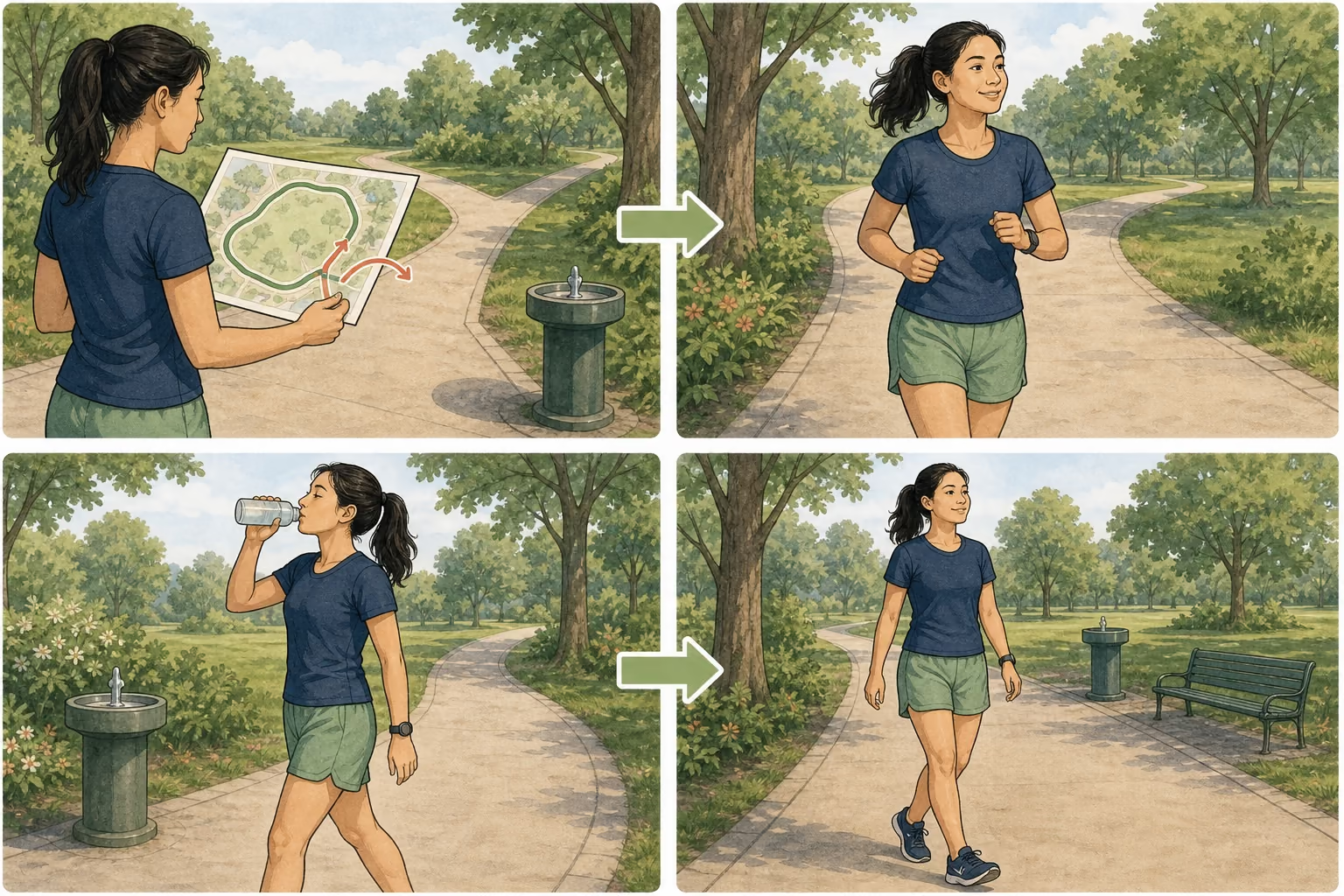
A one- or two-mile loop near home, a car, or a staffed park makes water, bathrooms, and an early stop available. That can feel less exciting than a point-to-point adventure, but the first long run is a systems test.
Count loops before leaving and stop at the planned one. If you feel excellent, record that as evidence for a future progression instead of adding a victory lap.
Out-and-backs require honest turnarounds
An out-and-back makes pacing visible and keeps navigation simple. Turn at half the planned time, not when you become tired. Account for an uphill return, headwind, rising temperature, or fewer water options.
Do not let the distance from home become motivation by entrapment. Carry a phone where appropriate and know transit, pickup, or shortcut options.
Terrain changes the cost
Keep the first route relatively familiar. Hills and trails can be valuable later, but elevation and uneven surfaces make pace comparisons less useful. Walk steep grades to preserve easy effort.
If the target race is hilly, add terrain over several weeks. The first long run does not need to solve the whole course.
What to prepare the night before
The exact outfit
Use shoes, socks, shorts or tights, and a top already worn on shorter runs. Check the forecast, but bring only layers you know how to carry once removed.
A route and exit plan
Share the route when appropriate, know daylight and park hours, and choose where water and bathrooms are available. Safety matters more than completing a prescribed number.
Breakfast timing
Choose familiar food rather than copying a professional athlete's meal. Leave enough time to notice how it feels before you are far from home.
Fluid access
Decide whether you will carry, cache where permitted, use a fountain, or loop past home. General hydration guidance cannot replace knowing the conditions and your tested routine.
A modest post-run plan
Have normal food and fluids available, dry clothing if needed, and a schedule that does not force you directly into another strenuous obligation.
Three first-long-run formats
Choose the simplest format that suits your present routine. The long run should remain predominantly easy.
Continuous easy long run
Extend comfortable time on feet for a runner already running continuously.
- Structure
- Walk 5 minutes, run at conversational effort for the planned 30–60 minutes, then walk 5–10 minutes.
- Effort
- 3–4 out of 10. Start slower than your shorter easy runs if needed.
- Recovery
- At least one low-load day; no compensatory speed work afterward.
- Progression
- Repeat the duration or add 5–10 minutes when the week remains stable.
Planned run-walk long run
Control effort and extend duration with predictable recovery breaks.
- Structure
- Use a practiced ratio such as 3 minutes running / 1 minute brisk walking from the first interval to the last.
- Effort
- Run portions conversational; walks begin before fatigue forces them.
- Recovery
- Normal walking is fine, but keep the following day free of hard training.
- Progression
- Change total time or ratio, not both in the same progression.
Time-capped exploration
Learn a safe route while keeping the training dose contained.
- Structure
- Choose a 40- to 50-minute cap, run easy for half the time, turn around, and return without trying to negative-split.
- Effort
- Steady conversational effort adjusted for terrain.
- Recovery
- Review whether the route or the duration created the challenge.
- Progression
- Keep the route and add a few minutes, or keep the time and try a different route—one change at a time.
Start slower than your excitement
The opening ten minutes often feel unusually easy because you are rested and the goal is novel. That is not evidence to speed up. Use a complete-sentence talk test and keep your hands, jaw, and shoulders relaxed. On a 1-to-10 effort scale, settle around 3 or 4.
If you cannot speak comfortably, shorten your stride, reduce pace, or walk. Pace should change on hills and in heat. A fixed watch target can convert an easy long run into threshold work—the kind of sustained hard effort that belongs elsewhere, if at all, in a beginner week.
A negative split means completing the second part faster than the first. Beginners do not need to engineer one on the first long run. The more useful goal is an even effort with no dramatic fade. If you naturally move a little faster at the end while remaining controlled, note it; do not turn it into a sprint finish.
Fuel and hydration without false precision
Short early long runs may need only normal preparation
A well-fed runner completing a cool 40-minute outing may not need calories during the run. That does not mean fueling is unimportant; it means the session may be too short to make mid-run intake the main lesson. As the outing grows, use the fueling-plan guide to decide what to test and when.
Eat a familiar meal or snack at a familiar interval, and note hunger, stomach comfort, and energy. Avoid testing a large breakfast and a new gel in the same outing.
Longer sessions become rehearsals
As duration approaches and exceeds an hour, practice the carbohydrate source and timing you may use in the race. Sports-nutrition position statements provide general guidance, but tolerance and logistics must be learned in training.
Record product, amount, timing, water, weather, and stomach response. A named gel that works for a friend is not evidence that it works for you.
Drink according to a plan grounded in conditions
Fluid needs vary with heat, humidity, pace, body size, and sweat rate. Know where water is available and avoid both beginning dehydrated and forcing excessive fluid on a schedule detached from thirst and conditions.
Medical conditions and medications can change nutrition or hydration decisions. General web guidance is not individualized care.
Runner scenario
Scenario: Evan's first five-miler
Evan, a new runner using a four-day plan
His recent long runs are 3.5 and 4 miles. The plan lists 5 miles this weekend, and a friend invites him to a hilly group route where the usual pace is faster than his easy pace.
- The decision
- Evan wants the social support but would need to increase distance, terrain, and pace at once.
- Recommended approach
- Choose a familiar flatter route for 4–4.5 easy miles, or join the group only if it agrees to his pace and a shorter loop with an exit. The five-mile box can wait.
- Why
- The group invitation changes three levers and makes it hard to stop at the planned load. A modest solo progression provides cleaner information and protects the next week.
Review the run with evidence, not mood
| Observation | Likely interpretation | Next decision |
|---|---|---|
| Finished conversational and next day is ordinary | Dose was manageable | Repeat or make one modest progression |
| First half fast, second half survival | Pacing problem more than an endurance verdict | Repeat distance with slower start or run-walk |
| Energy drops with hunger on longer outing | Fuel timing may need rehearsal | Test one familiar carbohydrate plan |
| Route adds unexpected hills and heat | Conditions raised the cost | Adjust route/effort before changing fitness conclusions |
| Soreness changes gait or worsens | Beyond ordinary review | Stop progression and seek appropriate assessment |
| Long run is fine but next week collapses | Weekly load or placement is too high | Shorten, repeat, or add recovery around it |
Common first-long-run errors
Using a new group as the pace plan
Company can help, but the fastest conversational runner often sets the pace. State your effort and turnaround before starting, or choose a group designed for your level.
Adding distance because the watch is short
GPS is imperfect. Do not circle a parking lot to make the display exact when the planned duration and purpose are complete.
Saving all weekly miles for Sunday
A giant long run on top of sparse weekday running creates a lopsided week. Establish supporting frequency and keep the long run proportionate.
Treating soreness as the score
Feeling wrecked does not prove effectiveness. Useful training leaves a stimulus you can absorb and build on.
Testing the full race kit at once
If something fails, you will not know the cause. Introduce one shoe, fuel, belt, or clothing change at a time on lower-stakes outings first.
The first two hours after the run
Cool down before you judge
Walk for five to ten minutes or until breathing and movement settle. A sudden stop can make an ordinary hard finish feel more dramatic. Use the cooldown to notice the difference between general fatigue and a specific issue that changes how you move.
Do not run extra because the planned distance ended away from a round watch number. The cooldown has its own job and does not need to appear as training mileage.
Eat and drink normally
Have access to a familiar meal or snack containing carbohydrate and protein, and replace fluid according to thirst, conditions, and your established needs. Recovery food does not need to carry a sports label. The practical goal is to avoid spending the next several hours underfed because the session disrupted your routine.
Do not force excessive fluid in an attempt to recover faster. General guidelines cannot know your sweat loss or health context; use the experience to refine the next plan and seek individual guidance where medical or nutrition issues apply.
Resume ordinary movement
Changing into dry clothes and taking a short easy walk later may feel better than remaining still all day. That does not mean adding a recovery workout. Keep the rest of the day compatible with the size of the training dose.
If you must work, travel, or care for others immediately afterward, reduce the run or choose another time. Recovery logistics belong in route and schedule design.
Build a sequence of long runs, not a staircase
| Week | Illustrative long run | Why |
|---|---|---|
| 1 | 45 min easy | Establish route, pace, and preparation |
| 2 | 45 min easy | Repeat to confirm the dose is manageable |
| 3 | 50 min easy | Make one modest duration change |
| 4 | 40 min easy | Reduce load while preserving routine |
| 5 | 50 min easy | Return to a known duration |
| 6 | 55–60 min easy | Progress only if the surrounding week is stable |
Why no universal ten-percent rule can plan the long run
The familiar instruction to increase mileage by no more than ten percent sounds precise, but it cannot account for starting volume, frequency, terrain, pace, training history, or an added workout. Ten percent of a very small week may be impractically tiny; the same percentage inside a week with new hills and strength can still be too much.
Use the rule, if at all, as a prompt to avoid large jumps—not as proof that a change is safe. A five- to ten-minute increase followed by repetition is easy to understand. So is holding the long run while adding a third short day. The plan should identify which lever is changing.
The observational half-marathon and marathon study in this guide found relationships among training volume, longest endurance run, performance, and injury outcomes. It does not establish a guaranteed progression formula. Your most useful evidence remains the response to completed weeks under your actual conditions.
Your first-long-run checklist
- 1
Set the cap
Choose time or distance from recent controlled training and write the stop point down.
- 2
Choose the route
Prioritize safety, water, bathrooms, and an exit over novelty.
- 3
Use tested gear and food
Keep the experiment limited to one planned detail.
- 4
Begin conversationally
Use planned walks and terrain adjustments before the effort rises.
- 5
Record the whole outcome
Log elapsed time, effort, conditions, practical lessons, and the following 48 hours before selecting the next long run.
Put it into a plan
Turn this guidance into your next useful step.
Use a free resource to explore your options, or build a race-specific plan around your date, availability, and current fitness.
Build a weekly structureKeep learning
Related resources
Half Marathon Weekly Mileage: How Much Should You Run?
Learn how to think about weekly mileage for a half marathon without forcing a one-size-fits-all number.
Read guideRun-Walk Half Marathon Training
Use planned run-walk intervals to build toward a half marathon with controlled effort and repeatable long runs.
Read guideHalf Marathon Fueling Plan: What to Practice
Create a simple half marathon fueling plan by practicing carbohydrates, fluids, timing, and race-day routines during training.
Read guideQuestions runners ask
- How many miles should my first long run be?
- Use your recent longest controlled outing as the anchor. A beginner running 2–3 miles may start with 3–4 easy miles; a run-walker may use 35–45 minutes instead. The right first long run is a modest extension, not a standard distance every beginner must reach.
- Should I run my long run slower than other runs?
- Usually yes, especially as duration grows. Use conversational effort and let pace slow on hills, in heat, or late in the session. The goal is sustained easy endurance. Starting slower also gives you room to learn whether the planned duration fits.
- Can I stop or walk during a long run?
- Yes. Planned walks, water stops, and route crossings do not invalidate the session. Keep elapsed time in your record and avoid sprinting after a stop. If run-walk is your race strategy, long runs are where it becomes automatic.
- Do I need a gel on my first long run?
- Not automatically. A short early long run may need only normal pre-run food and fluid. As sessions extend, practice a familiar carbohydrate product and water in conditions similar to the race. Do not wait until race day for the first test.
- What should I do the day after a long run?
- Keep it low load: rest, normal walking, or a very short recovery session if your established plan includes one and movement feels normal. Do not schedule a new hard workout to capitalize on motivation. Review the long run after the immediate excitement has settled.
- What if I cannot finish the planned distance?
- Stop at the appropriate point and record why: pace, route, heat, fueling, or an overly large jump. One shortened run is information, not a verdict. Repeat a lower manageable distance and adjust the cause rather than adding the missing miles later.
- How often should the long run increase?
- Not every week must be longer. Repeat distances and lighter weeks allow adaptation and reveal whether the rest of training remains stable. Progress when the current long run is controlled and recoverable, then change only one major demand.
Sources and methodology
This guide is educational, not medical advice. It is written from general training principles and linked primary or official references; use judgment for your own conditions and consult a qualified professional for individual health concerns. Read our editorial methodology.
- ACSM's Guidelines for Exercise Testing and Prescription — American College of Sports Medicine. General exercise-training principles and progression guidance.
- Physical Activity Basics — Centers for Disease Control and Prevention. Public-health guidance on physical activity and its role in health.
- Training volume and longest endurance run related to performance and running injuries — Scandinavian Journal of Medicine & Science in Sports. Observational study of recreational half-marathon and marathon runners.
- Exercise and Fluid Replacement — American College of Sports Medicine. Position stand on hydration during exercise.
- Nutrition and Athletic Performance — American College of Sports Medicine, Academy of Nutrition and Dietetics, and Dietitians of Canada. Joint position statement on sports nutrition.